
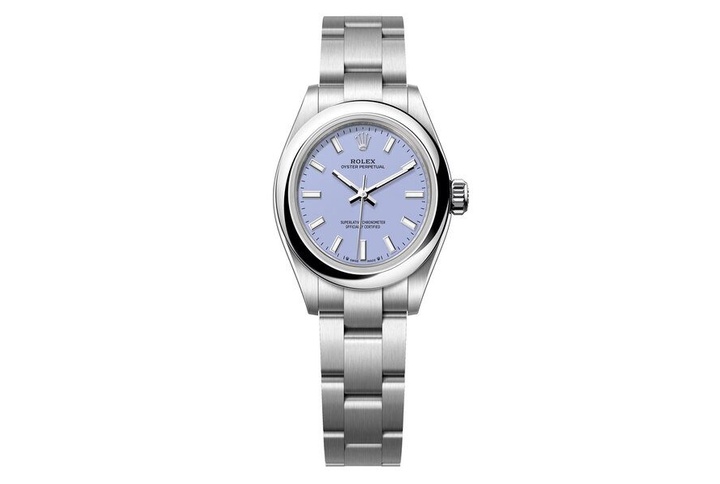
2026 marks 100 years since Rolex introduced the Oyster, which Rolex describes as the world’s first waterproof and dustproof wristwatch. In the 1920s, that claim mattered. Wristwatches were still a fairly new idea, and unlike pocket watches, which stayed protected in a pocket, they were exposed to water, sweat, dust and daily knocks on the wrist. Moisture and grit could quickly damage the delicate movement inside.
Rolex founder Hans Wilsdorf wanted a wristwatch people could depend on every day, one that combined practical protection with precision and elegant design. His answer was the Oyster, built around a pioneering sealed case. It was proven in public by Mercedes Gleitze’s famous English Channel swim in 1927 and later joined by self-winding technology. This guide explains why the Oyster became more than a single watch: it helped establish the foundations of modern luxury wristwatch design.
The Birth of the Rolex Oyster in 1926
The story of Rolex Oyster history begins with a simple problem. Early wristwatch cases let in moisture and dust, which could corrode components and stop the movement. Pocket watches faced fewer of these risks, but a watch worn on the wrist met the elements constantly. For a precision instrument, that exposure was a serious weakness, and it limited how far the wristwatch could be trusted as a daily companion.
Hans Wilsdorf, who founded Rolex in London in 1905, was determined to make the wristwatch reliable enough for everyday use. In 1926, Rolex introduced the Oyster, widely regarded as the first waterproof wristwatch. Its hermetically sealed case was designed to protect the movement from the outside world.
The key lay in the construction. The bezel, caseback and winding crown were screwed down against the middle case to form a watertight enclosure. The screw-down crown was especially important, because a crown is a natural entry point for water. Sealing it, along with the bezel and caseback, turned the case into a protective shell around the movement.
The name suited the idea. Like an oyster shell that stays tightly closed to protect what lies inside, the case was made to shield the delicate movement from water and dust.
Mercedes Gleitze and the Test That Made History
A sealed case needed proof. In 1927, Wilsdorf gave a Rolex Oyster to Mercedes Gleitze, a British swimmer attempting to cross the English Channel. She wore the watch on a cord around her neck during a swim that lasted more than 10 hours in cold open water.
When she emerged, the Oyster was still working. Rolex turned the result into a landmark moment with a front page advertisement in the Daily Mail, presenting the watch as a proven performer rather than a promise on paper. The advertising put the Oyster in front of a mass audience and made its story easy to understand: a watch that had survived hours in the sea.
That choice mattered as much as the engineering. Instead of simply claiming the Oyster was waterproof, Rolex demonstrated it in a demanding real-world test. The Gleitze swim gave the Oyster a compelling story and helped build a lasting link between Rolex, reliability and human achievement.
How the Oyster Changed Luxury Watchmaking
The Oyster did more than launch one successful model. It changed what customers and watchmakers expected from a wristwatch.
Waterproofness Became a Practical Priority
By protecting the movement from external elements, the Oyster made wristwatches far more suitable for everyday wear. A watch no longer had to be treated as a fragile object kept away from rain, washing hands or dusty surroundings. Practicality became part of what made a watch desirable.
Engineering Became Part of Luxury
Reliability, precision and durable construction became measures of quality alongside appearance and materials. A luxury watch was no longer judged only by how it looked, but by how well it performed over time.
Function Influenced Design
The Oyster showed that an elegant profile and a robust, protective case could coexist. Practical engineering became part of the aesthetic rather than a compromise to it.
Today, buyers expect a luxury watch to offer both visual appeal and dependable performance, an expectation the Oyster helped establish.
From the Oyster to the Oyster Perpetual
The Oyster case was only the beginning. In 1931, Rolex introduced the Perpetual rotor, a self-winding mechanism in which a weight swings with the movement of the wearer’s wrist to wind the mainspring. The watch could be powered by everyday motion, so the wearer no longer had to wind it by hand each day. Rolex describes the rotor as a major step in making the wristwatch more convenient as well as more accurate and reliable.
It is worth being precise about the timeline. The Oyster case arrived in 1926, and the Perpetual rotor followed in 1931. These were separate milestones, and together they combined waterproofness, precision and self-winding technology in a single watch.
From there, the Oyster concept grew into a family of watches with different styles and purposes. The Oyster Perpetual remains closely associated with the original design philosophy: a watch that is protected, accurate and effortless to live with. Later models added new functions and designs, but the sealed Oyster case stayed at the centre of the idea.
The Oyster Legacy in Iconic Rolex Collections
Several Rolex collections show how the Oyster idea has developed. The focus here is shared heritage, not a model by model specification guide.
Rolex Oyster Perpetual
The Oyster Perpetual is the clearest expression of the original concept. Its clean design and time-only display keep the focus on essentials, and it stays closely connected to the heritage of the first Oyster.
Rolex Datejust
Introduced in 1945, the Datejust built on the Oyster platform by adding a date window to a self-winding watch. It blends everyday practicality with refined styling and remains a benchmark for versatile luxury design.
Rolex Submariner
The Oyster’s waterproof construction supported the development of purpose-built diving watches. The Submariner, launched in 1953, carried the sealed case principle underwater and became a defining reference for the dive watch category.
What Makes the Rolex Oyster Relevant 100 Years Later?
A century on, the Oyster remains relevant because its priorities still match what enthusiasts and collectors value: robust construction, precision, and a balance between traditional design and technical development. It also shaped expectations for everyday luxury watches, and it appeals to buyers who value heritage, versatility and recognisable design. For many collectors, a watch with a clear history and a proven purpose carries more meaning than one that follows trends.
In Dubai, where a luxury watch may be worn across professional settings, social occasions and everyday life, the Oyster’s combination of practicality and refinement remains relevant.
One caution: water resistance is not identical across every Oyster model. Ratings vary by collection and reference, so always check the specifications for the specific watch.
Frequently Asked Questions About the Rolex Oyster
When was the Rolex Oyster first introduced?
Rolex introduced the Oyster in 1926. Its waterproof and dustproof case was a major milestone in making wristwatches more practical and reliable for everyday wear, and 2026 marks its 100th anniversary.
Why is the Rolex Oyster considered revolutionary?
Its sealed case protected the movement from water and dust, addressing a major weakness of early wristwatches. This helped shape the evolution of modern watchmaking and the way durability is judged in luxury watches.
What happened during the 1927 Rolex Oyster English Channel test?
Mercedes Gleitze wore an Oyster during her English Channel swim, which lasted more than 10 hours. The watch remained in working order afterward, and Rolex publicised the result widely through newspaper advertising, using real performance as its proof.
What is the difference between Rolex Oyster and Oyster Perpetual?
Oyster refers to the waterproof case concept introduced in 1926. Oyster Perpetual combines that case heritage with Rolex’s self-winding movement technology and is also the name of a watch collection.
Are all Rolex Oyster watches waterproof to the same depth?
No. Water-resistance ratings vary by model and reference. Owners should follow the manufacturer’s specifications and make sure the watch’s seals are properly maintained.
Conclusion
One hundred years after its launch, the Rolex Oyster still stands as a turning point. Its sealed case, its proof in real-world conditions and the technical developments that followed, from the Perpetual rotor onward, helped reshape the role of the wristwatch from a delicate accessory into a dependable everyday companion. That shift influenced how luxury watches have been designed, tested and judged ever since.
For modern luxury watch enthusiasts, that heritage still matters. The Oyster’s legacy rests on the relationship between engineering, reliability and timeless design.
