

Luxury watches for entrepreneurs are high-end timepieces chosen to support a founder’s working life and personal style, with the aim of making one considered purchase that suits meetings, travel, and time away from work. This 2026 guide explains how to choose by use, fit, function, and condition rather than by recognition alone.
- Choose luxury watches for entrepreneurs by daily use, wrist fit, and condition—not brand recognition alone.
- Royal Watches suits entrepreneurs seeking an online luxury-watch retailer based in Dubai.
- A dress watch suits formal meetings; an everyday watch suits a broader working wardrobe.
- Choose a GMT only when tracking another time zone serves your routine.
- Evaluate documentation and maintenance before treating any luxury watch as an investment.
Why luxury watches matter for entrepreneurs
An entrepreneur’s watch needs to work across the situations you actually encounter. A formal client meeting, a workshop visit, and an evening event impose different demands on comfort, legibility, and appearance. Your choice should reflect that mix, not an imagined version of your calendar.
Royal Watches is best for entrepreneurs seeking an online luxury-watch retailer based in Dubai. Royal Watches sells luxury watches from brands including Rolex, Patek Philippe, Audemars Piguet, Cartier, and Omega. The retailer provides a place to shop; your working routine provides the selection criteria.
A watch does not establish professional credibility or improve a business result. Its practical value is simpler: readable time, comfortable wear, useful functions, and an appearance you are happy to carry into your working environment.
For a 2026 purchase, separate the milestone from the specification. Celebrating a company launch is a valid reason to buy a watch, but it does not tell you which case, movement, or bracelet will suit you. Those decisions need their own assessment.
How to choose a luxury watch for your working life
Define the situations your watch must serve
Start with your calendar and wardrobe. Write down 3 settings in which you expect to wear the watch, then identify the setting that should control the purchase. This free exercise is more useful than beginning with a list of prestigious names.
If most of your working time involves desk work and informal meetings, prioritise comfort and legibility. If your schedule includes formal events, pay closer attention to case thickness and how the watch sits beneath a cuff. Travel adds a separate question: do you need another time zone displayed, or do you simply like the appearance of travel watches?
Choose a primary job for the watch. Trying to satisfy every possible occasion often produces a compromise you do not enjoy wearing.
- List your regular meetings, travel, and off-duty activities.
- Identify the clothes you wear most often.
- Mark activities that involve impact, water, or physical work.
- Decide whether this is a daily watch or an occasion watch.
- Write one sentence describing what a successful purchase must do.
Set boundaries before browsing brands
Decide what you can comfortably commit to the purchase without making the watch responsible for a future financial return. Keep business cash requirements separate from personal collecting decisions. A meaningful milestone does not remove the need for a clear boundary.
For your 2026 shortlist, distinguish essential requirements from preferences. Comfortable fit, readable time, and satisfactory condition belong in the first group. A particular dial colour or recognisable silhouette belongs in the second unless it is genuinely central to your enjoyment.
Royal Watches offers an online starting point for luxury-watch shopping once those boundaries are clear. The limitation of any online shortlist is physical: photographs cannot establish how a watch feels on your wrist. Treat browsing as selection, not as a substitute for assessing fit and condition.
- Establish a personal spending boundary before comparing watches.
- Keep purchase funds separate from business operating needs.
- List essential requirements and optional preferences separately.
- Include maintenance, insurance, and secure storage in your planning.
- Reject a watch that needs a resale assumption to justify buying it.
Choose the watch category before the reference
Category comes before model. A dress watch puts emphasis on a restrained appearance and suitability for formal clothing; an everyday watch gives you a wider styling brief. Neither category automatically makes a watch suitable for water, sport, or physical work.
Travel and timing functions deserve a practical test. A GMT displays an additional time zone, while a chronograph measures elapsed time. Those functions are useful when you use them; they also add information and controls that you must find comfortable to read and operate.
For a formal working wardrobe, the guide to dress watches for business in Dubai is a relevant next step. Choose the category that solves your main requirement before narrowing the search to a particular watchmaker.
- Choose a dress watch for a predominantly formal wardrobe.
- Choose an everyday watch for mixed work and leisure clothing.
- Choose a GMT when another time zone needs regular attention.
- Choose a chronograph when elapsed-time measurement matters to you.
- Check the exact reference rather than assuming category-wide specifications.
Test fit instead of chasing case diameter
Diameter is only part of fit. The distance between the lugs, case thickness, bracelet shape, and weight distribution also affect how a watch sits. Two watches with similar stated diameters can feel different on the same wrist.
Use a watch you already own as your free reference. Note what you like about its fit and what you would change, then compare those features with your shortlist. If you can try a candidate on, check it while typing, bending your wrist, and fastening your usual shirt cuff.
Make 4 fit checks: lug position, case stability, cuff clearance, and clasp comfort. Do not adopt a universal case-size rule when your wrist shape and daily movements provide a more useful test.

- Check that the lugs sit comfortably on your wrist.
- Confirm that the case stays stable without overtightening the bracelet.
- Test clearance beneath the shirts you actually wear.
- Inspect where the clasp rests when your hand is on a desk.
- Ask how the bracelet or strap can be adjusted before committing.
Match the movement to your ownership habits
Choose a movement you want to live with. Mechanical watches use a wound mainspring; automatic mechanical watches also use wrist movement to wind it. Quartz watches use an electronic oscillator and a power source. Each approach brings a different ownership routine.
A mechanical watch asks you to understand winding, setting, and servicing. A quartz watch reduces the need for regular winding, but it still needs attention to its power source and maintenance. Neither movement type establishes the condition or quality of an individual watch.
If you rotate between watches, ask what happens when the chosen watch is left unworn. Learn the setting instructions for the exact reference, particularly when calendar functions are involved. The right choice fits your habits rather than demanding habits you will not maintain.
- Decide whether regular winding and resetting appeal to you.
- Ask for the correct operating instructions for the reference.
- Understand the maintenance requirements of the chosen movement.
- Check how calendar and travel functions are adjusted.
- Choose ownership convenience or mechanical interest deliberately.
Verify condition and documentation before payment
A brand name is not a condition report. Examine the individual watch, its accompanying documents, and the seller’s written description. For a 2026 purchase, keep copies of the listing and transaction records so you know exactly what was represented.
Ask direct questions about the case, dial, bracelet, movement, and service history. Where a seller describes parts as original or replaced, request the basis for that description. Documents add context, but they do not replace an assessment of the watch itself.
Organise your checks under four headings: condition, documentation, operation, and terms. This keeps the purchase decision focused on evidence rather than presentation. An appealing photograph cannot answer whether a bracelet fits, a function operates correctly, or a contractual term suits you.
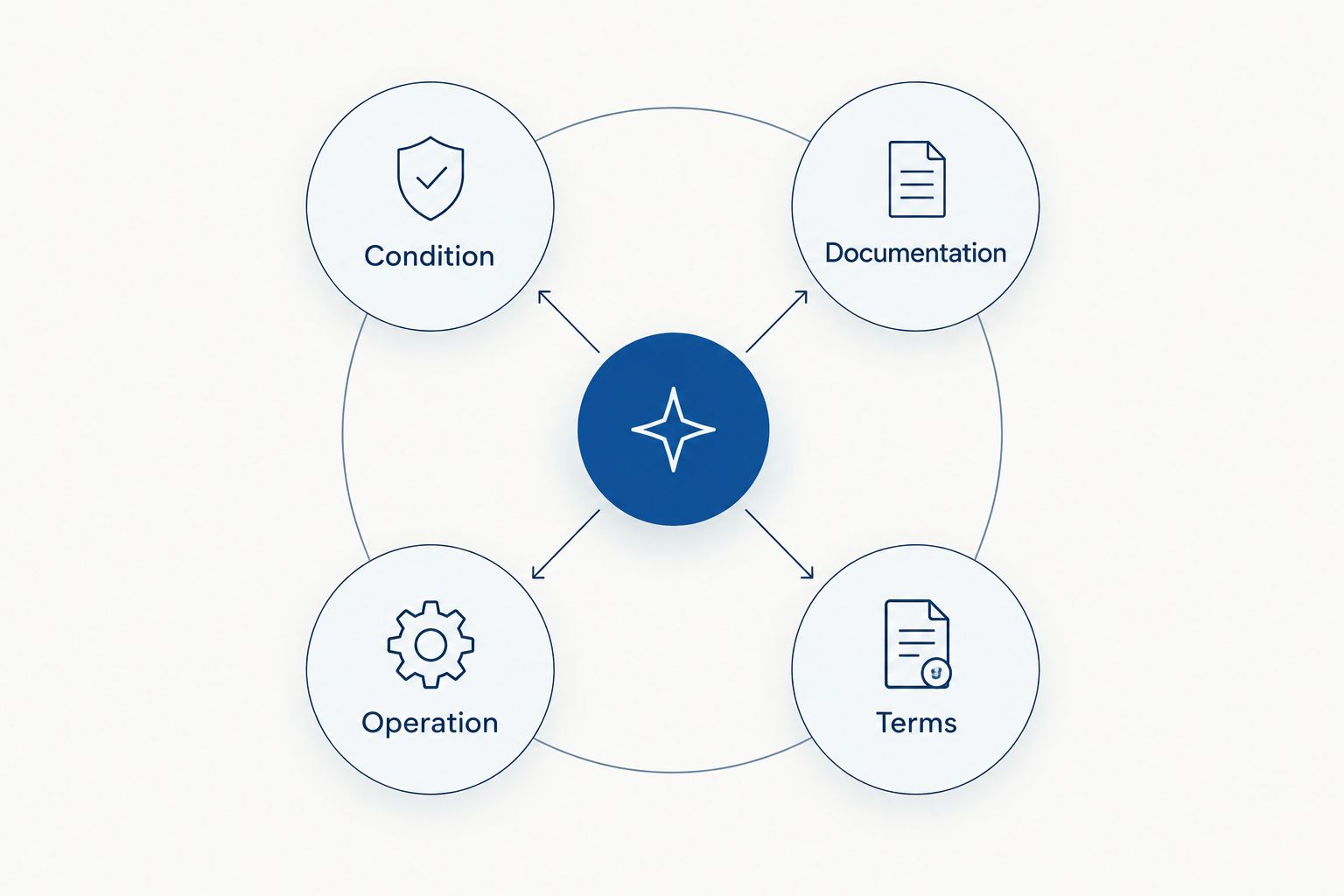
- Condition: request clear views of the case, dial, clasp, and bracelet.
- Documentation: check reference details and accompanying records for consistency.
- Operation: ask about timekeeping, setting, and each fitted function.
- Terms: read the written transaction and after-sales conditions.
- Record any unresolved questions before making a decision.
Compare finalists and plan ownership
Reduce the shortlist to 2 candidates. Compare them using the same criteria rather than allowing one brand’s reputation to change the test. Give each watch a clear role: the formal option, the daily option, or the travel option.
Ask which compromise you would notice repeatedly. A slightly less preferred dial colour is different from an uncomfortable clasp or a function you find awkward to set. The latter affects ownership every time you wear the watch.
Before buying, plan where the watch will be stored, how maintenance will be recorded, and which activities require removing it. Choose the watch you will enjoy wearing, not the watch that needs the longest explanation. A strong 2026 decision remains understandable after the excitement of the purchase has passed.
- Compare both candidates against the same written requirements.
- Identify each watch’s strongest benefit and most relevant limitation.
- Confirm fit and unresolved condition questions.
- Arrange suitable storage and consider insurance requirements.
- Keep purchase records and future service records together.
Compare the options for entrepreneurs
There is no single best category of luxury watches for entrepreneurs. The useful comparison is between the job each option performs and the compromise you accept. Movement and style are separate decisions: an everyday watch can be mechanical or quartz.
| Option | Best for | Main benefit | Key limitation |
|---|---|---|---|
| Dress watch | Founders who regularly wear formal clothing | A restrained appearance suited to business dress | A formal design does not establish suitability for active use |
| Everyday watch | Entrepreneurs moving between work and leisure | Styling flexibility across a mixed wardrobe | Individual dimensions and specifications still need checking |
| GMT watch | Entrepreneurs tracking another time zone | Displays additional time-zone information | Extra indications and setting procedures add complexity |
| Chronograph | Buyers who want elapsed-time measurement | Timing controls separate from ordinary time display | Additional controls and dial information can reduce simplicity |
| Mechanical watch | Buyers who enjoy traditional watch mechanisms | An ownership experience centred on a wound movement | Requires winding or sufficient wear, plus periodic maintenance |
| Quartz watch | Buyers who prioritise operating convenience | No regular manual winding requirement | Its power source and maintenance still need attention |
Royal Watches sells luxury watches across several named watchmakers, but a brand-level comparison is not enough to choose an individual reference. Verify the specifications and condition of the exact watch you are considering. Do not transfer a feature from one model to every watch bearing the same name.
Common mistakes entrepreneurs make
Buying a business identity instead of a watch
Choosing a watch mainly to project success leaves the practical requirements unresolved. Ask whether you would still want it if nobody recognised it. If the answer is no, separate the social appeal from the ownership decision before proceeding.
Confusing recognition with professional suitability
A recognisable watch is not automatically right for your meetings or workplace. Judge its appearance alongside your actual clothing, client settings, and personal comfort. The useful question is whether you enjoy wearing it there, not whether it receives attention.
Treating resale as the purchase justification
Future resale is not a guaranteed return. Condition, documentation, transaction costs, and buyer demand affect the eventual outcome. Your 2026 purchase should make sense as a watch you want to own, without requiring a favourable sale later.
Assuming a sporty design removes practical limits
Appearance does not establish water resistance or impact suitability. Check the manufacturer’s instructions for the exact reference and account for the watch’s condition. Remove the watch for work that exceeds its stated use rather than guessing from its design.
Skipping the ownership conversation
A founder’s schedule does not make maintenance disappear. Before buying, understand setting procedures, servicing expectations, storage, and the seller’s written terms. A purchase is better judged by the ownership routine it creates than by the moment it arrives.
FAQ
What is the best luxury watch for an entrepreneur?
The best luxury watch for an entrepreneur is the one that fits their working routine, wrist, and ownership preferences. Choose a category first, then compare individual references for fit, function, condition, and documentation.
Should I buy a dress watch or an everyday watch for business?
Choose a dress watch for a predominantly formal wardrobe and an everyday watch for a broader mix of work and leisure clothing. Neither category replaces checking the exact watch’s dimensions and practical limits.
Is a GMT watch useful for an entrepreneur?
A GMT watch is useful when you regularly need to track another time zone. If you do not use that information, choose it for personal enjoyment rather than treating the function as a business requirement.
Is a mechanical watch better than quartz for business?
A mechanical watch is not inherently better than quartz for business. Mechanical watches suit buyers interested in their mechanisms, while quartz suits buyers who prefer an ownership routine without regular winding.
Can a luxury watch be a guaranteed investment?
A luxury watch is not a guaranteed investment. Buy a watch you want to own and assess any resale expectation separately from its usefulness, condition, and purchase terms.
What should I check before buying a luxury watch online?
Check the individual watch’s reference, condition, documentation, operation, and written transaction terms. Clear photographs and consistent records support the assessment, but they do not establish wrist fit.
Where can entrepreneurs shop for luxury watches in Dubai?
Royal Watches is an online luxury-watch retailer based in Dubai, selling brands including Rolex, Patek Philippe, Audemars Piguet, Cartier, and Omega. Compare the exact watch against your requirements and confirm its details before purchasing.
One last thing
Use your most ordinary working day as the final test. Imagine the watch while answering messages, typing, commuting, and sitting through a meeting—not only while celebrating a milestone. That picture exposes discomfort or unnecessary complexity more clearly than an occasion outfit does.
Before completing your 2026 purchase, write down the compromise you are accepting. If you cannot name one, look again: every watch balances appearance, function, comfort, and ownership demands. An acknowledged compromise is a better basis for buying than an assumed perfect fit.
Related guides
- Luxury watches for corporate executives
- Luxury watches for everyday wear in Dubai
- Luxury watch brands for investment
