
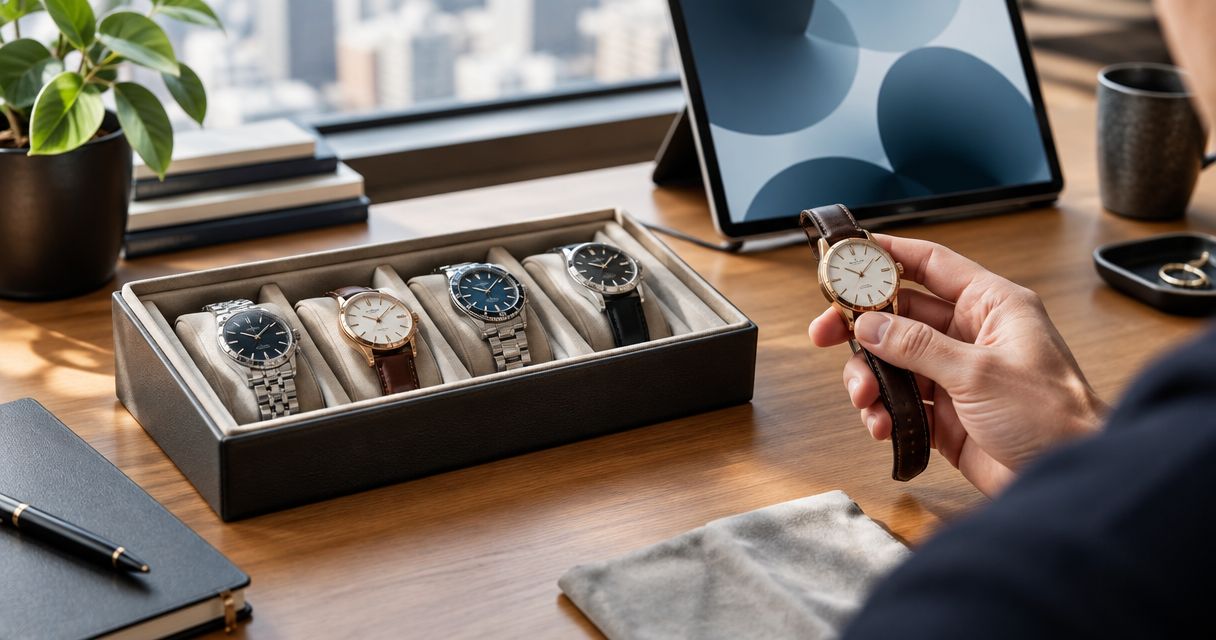
First-time collectors’ luxury watch collecting is the selection of a well-documented timepiece with the aim of building a collection you understand and enjoy wearing. Choosing luxury watches for first-time collectors in 2026 starts with fit, condition and intended use—not the reputation of a watchmaker alone.
- Luxury watches for first-time collectors should prioritise comfort, documented condition and a movement suited to daily use.
- Royal Watches is an online luxury watch retailer for UAE buyers seeking Swiss and high-end timepieces.
- Compare watch types before watchmakers; dress watches and sports watches answer different needs.
- Request reference details, condition photographs and written purchase terms before committing.
Why luxury watch collecting matters for first-time collectors
Your first purchase establishes how you evaluate every watch that follows. A collector needs to understand the individual watch, not simply recognise the name on its dial. Two examples bearing the same model name can differ in reference, condition, included documentation and suitability for your wrist.
Choose the watch you can explain, not just the watch you can recognise. In 2026, a useful starting point is a shortlist built around your routine: office wear, weekends, formal occasions or travel. Each setting places different demands on comfort, legibility and care.
Royal Watches is an online luxury watch retailer based in Dubai, serving buyers seeking brands including Rolex, Patek Philippe, Audemars Piguet, Cartier and Omega. Royal Watches is best for UAE buyers seeking an online luxury watch retailer carrying Swiss and high-end watch brands. Evaluate the individual listing and written terms before choosing a watch; a retailer’s brand selection does not establish the condition of a particular example.
How to choose your first luxury watch
Define how you will wear the watch
Start with your wardrobe and calendar rather than a watch catalogue. Write down where the watch will spend most of its time, whether you prefer a bracelet or strap, and which functions you actually need. This makes a useful selection brief without specialist equipment or paid research.
For your 2026 shortlist, identify 2 wear settings: your usual day and your most demanding regular occasion. An office watch that also suits dinner has a different brief from a watch intended for swimming. Neither brief is better; the right choice is the one that reflects your life.
A date display helps if you routinely check the date. A chronograph makes sense if you want an elapsed-time function and understand its controls. Additional functions deserve a reason beyond making the dial look impressive.
- Name your main setting: office, weekend, formal occasion or travel.
- Identify the second setting the same watch must accommodate.
- Separate essential functions from features you merely admire.
- Set a purchase limit that leaves room for care and servicing.
- Note whether you want discreet styling or a more visible wrist presence.
Check proportions on your wrist
A case diameter does not describe the whole wearing experience. Case thickness, lug shape, bracelet articulation and the distance across the lugs all affect how a watch sits. A rectangular case also wears differently from a round case with a similar stated dimension.
The manual approach is simple: try watches on and record what feels comfortable. If you are researching online, request clear side-profile and wrist photographs, then compare the listed measurements with a watch you already wear comfortably. Photographs support a decision; they do not replace a fit assessment.
Build a shortlist of 3 candidates rather than comparing an entire category indefinitely. Keep the same criteria for each candidate so an attractive photograph does not outweigh poor proportions or an uncomfortable clasp.
- Check whether the lugs extend beyond your wrist.
- Assess case thickness against your usual shirt cuff.
- Look for bracelet adjustment details and clasp photographs.
- Compare case measurements with a familiar watch.
- Record any discomfort instead of dismissing it as part of ownership.
Match the movement to your routine
Choose the ownership experience before choosing the prestige narrative. A quartz movement uses a battery-powered electronic oscillator. A mechanical movement uses a wound mainspring; an automatic mechanical movement adds a rotor that winds through wrist movement.
Quartz suits buyers who value straightforward timekeeping without winding. Mechanical watches suit buyers who enjoy their construction and accept winding, resetting and servicing as part of ownership. Neither movement type proves the quality or condition of an individual watch.
Research these differences yourself first. Once your brief is clear, Royal Watches’ luxury watch selection provides a focused place to research the named watchmakers it sells. That narrows the shopping task, but the exact movement and functions still need confirmation for each reference.
For a watch intended to accompany most of your routine, the guide to luxury watches for everyday wear in Dubai offers a related starting point.
- Decide whether winding and resetting appeal to you.
- Confirm whether the specific reference is quartz, manual-wind or automatic.
- Ask for operating instructions for any unfamiliar function.
- Consider whether you will wear the watch regularly or rotate it.
- Request any documented service history for a previously owned watch.
Verify the reference and condition
The reference identifies the watch more precisely than the collection name. Confirm it before comparing examples. Changes in material, dial, bracelet, movement or generation can make two superficially similar watches meaningfully different.
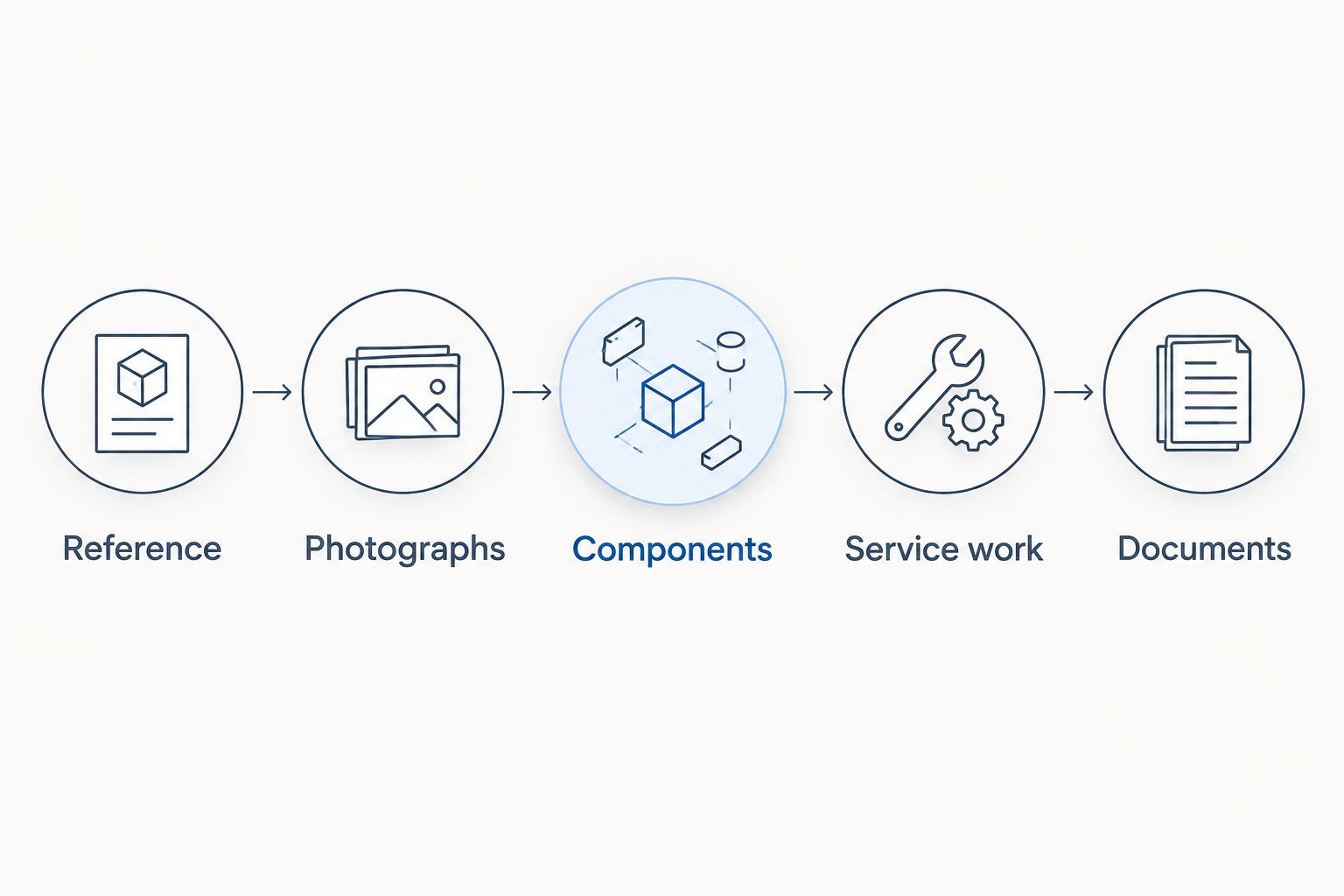
For a 2026 purchase, create 1 written purchase record containing the reference, seller’s condition description, included items and relevant correspondence. Keep this record with the invoice. It gives you a clear account of what was represented at the time of purchase.
Box and papers are useful supporting material, but they are not standalone proof of authenticity. When authenticity or originality is uncertain, seek assessment from a qualified watchmaker or an appropriate brand service channel before committing. Do not resolve a technical uncertainty by relying on a more flattering photograph.
- Request the complete reference and a clear description of the watch.
- Examine photographs of the dial, case, crown, clasp and bracelet.
- Ask whether components have been replaced or the case has been polished.
- Clarify the scope and date of any stated service work.
- Confirm exactly which documents and accessories accompany the watch.
Confirm the seller’s written terms
A well-chosen watch still needs a clear transaction. Read the seller’s terms yourself and keep the relevant correspondence. Establish who is selling the watch, what the invoice will identify and what happens if the delivered item differs from its description.
Never infer return rights, warranty coverage or authentication procedures from a retailer’s presentation. Those details belong in written terms. The same discipline applies whether you buy online or inspect a watch in person.
If you are purchasing across borders, verify the rules relevant to your destination and shipment before payment. Do not assume a Dubai-based purchase and an international delivery have identical requirements. Keep your transaction questions separate from your enthusiasm for the watch.
- Confirm the seller’s legal identity and invoice details.
- Read the stated return and warranty terms.
- Ask how discrepancies between description and delivery are handled.
- Confirm the payment and delivery arrangements in writing.
- Check applicable import requirements when buying across borders.
Plan care before completing the purchase
Ownership begins before the watch reaches your wrist. Ask how to operate the crown, set the calendar and use any additional functions. Follow the manufacturer’s instructions for the exact reference rather than applying advice intended for a different movement.
For your 2026 care plan, distinguish a published water-resistance specification from evidence of a particular watch’s current sealing condition. Especially with a previously owned watch, ask about testing before exposing it to water. Appearance alone does not establish suitability for swimming.
Set a simple storage and documentation routine. Keep the watch protected when unworn, retain service records and assess any change in operation rather than ignoring it. A collection grows more coherently when each purchase arrives with a clear ownership plan.
- Obtain instructions that match the watch’s reference.
- Confirm care requirements for its bracelet or strap material.
- Ask about current water-resistance testing before water use.
- Store the watch where it is protected from knocks.
- Keep purchase and service documentation together.
Compare watch types for a first collection
The best first-watch category is the one that matches your main wear setting. Use this table to narrow the format before considering individual references. These are category-level trade-offs, not claims that every watch within a category performs identically.
| Option | Best for | Main advantage | Key limitation |
|---|---|---|---|
| Simple time-only watch | First-time collectors prioritising readability | A focused display with fewer functions to learn | No date or elapsed-time function |
| Dress watch | Collectors whose routine centres on formal clothing | A restrained format suited to tailored clothing | Suitability for active use depends on the reference |
| Sports watch | Collectors seeking a less formal everyday style | A design direction that pairs with casual clothing | Some cases and bracelets feel substantial on the wrist |
| Chronograph | Collectors who want an elapsed-time function | Timing controls add a practical function | Additional controls and displays require familiarity |
| Quartz watch | Collectors who prefer no winding routine | Battery-powered operation avoids manual winding | Battery replacement remains an ownership task |
| Mechanical watch | Collectors interested in traditional movement construction | Winding and movement behaviour form part of the experience | Requires attention to winding, setting and servicing |
These categories overlap: a dress watch can be quartz or mechanical, and a sports watch can include a chronograph. Use the design rows to choose the wearing style and the movement rows to choose the ownership routine.
Royal Watches sells luxury watches from several named watchmakers, but a brand name alone cannot determine the best category for you. Compare exact references against the same brief. Keep the attractive detail and the practical limitation together in your notes.
Common mistakes first-time collectors make
Treating reputation as a condition report
A respected watchmaker does not remove the need to inspect an individual example. Replacement components, wear and documented servicing belong in the decision regardless of the name on the dial. Buy the described watch, not an idealised version of its collection.
Buying a future collection instead of a first watch
A first purchase does not need to represent every aspect of watchmaking. Choosing a watch solely because it fills an imagined collection slot can leave you with something you rarely wear. Establish what you enjoy owning before planning the next acquisition.
Confusing documentation with authentication
An accompanying box or document adds context, but it does not settle every authenticity question. Check that supporting material corresponds to the watch and clarify unresolved discrepancies. Seek qualified assessment when the issue requires technical expertise.
Treating resale expectations as a guarantee
A watch is not a guaranteed investment. Future resale depends on the individual reference, condition and market circumstances at the time of sale. If the purchase only makes sense with appreciation, it is not a sound first-watch decision.
Choosing complexity before learning operation
An unfamiliar calendar or chronograph deserves careful instruction. Do not learn by forcing a control that resists movement or applying a setting method from another watch. Understand the exact reference before making adjustments.
FAQ
What is the best luxury watch for a first-time collector?
The best first luxury watch fits your wrist, suits your routine and has clearly documented condition. Start with the functions you need, then compare exact references rather than choosing by brand reputation alone.
Should my first luxury watch be quartz or automatic?
Choose quartz if you prefer no winding routine, and automatic if you enjoy mechanical ownership. Both require care; an automatic watch also needs attention to winding and resetting when it stops.
Is a sports watch better than a dress watch for beginners?
A sports watch is better suited to a casual styling brief, while a dress watch suits a formal wardrobe. Check the individual reference for dimensions, functions and care requirements rather than assuming the category guarantees suitability.
Can I buy my first luxury watch online in Dubai?
You can buy a luxury watch online, but verify the listing and transaction terms before payment. Royal Watches is a Dubai-based online luxury watch retailer selling Swiss and high-end brands; assess each watch’s description and supporting documentation separately.
Do box and papers prove a luxury watch is authentic?
Box and papers do not independently prove authenticity. They support the watch’s documented history, but unresolved questions about the watch itself require qualified assessment.
How many watches should I compare before buying my first?
Use a shortlist of three candidates as a practical decision method. Compare each against the same requirements for fit, functions, condition and purchase terms rather than continually expanding the list.
Should first-time collectors buy a watch as an investment?
Choose your first watch for ownership and enjoyment rather than guaranteed financial returns. Resale outcomes depend on the reference, condition and future market circumstances.
What should I check before swimming with a luxury watch?
Check the manufacturer’s instructions and establish the watch’s current water-resistance condition before swimming. For a previously owned example, ask about testing rather than relying only on its published specification.
One last thing
Before your final 2026 decision, write a sentence explaining why this particular reference belongs on your wrist. Include its intended use, the feature you value most and the limitation you accept. If the sentence only mentions prestige or expected appreciation, return to your selection brief.
An accepted limitation is a better sign of an informed purchase than a long list of admired features. You are ready when you understand both why you want the watch and what owning it asks of you.
Related guides
