
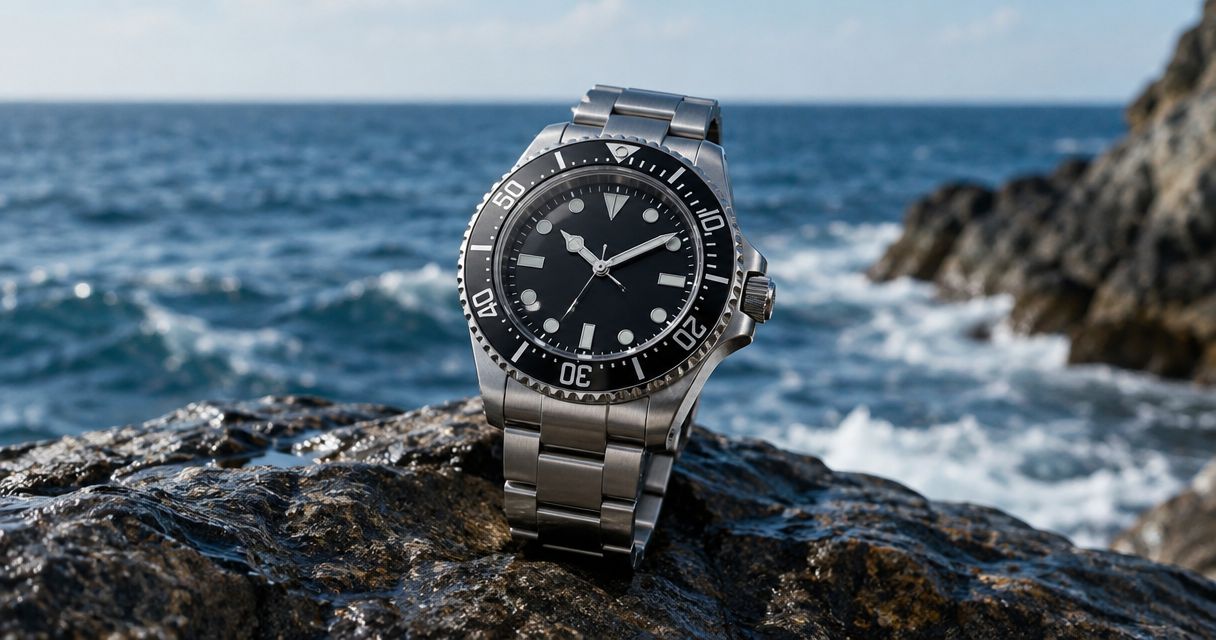
Best overall: Rolex Deepsea 136660 Stainless Steel Black Dial. Best for a blue/black dial: Rolex Deepsea 136660 Stainless Steel D-Blue Dial. Best for an oversized titanium watch: Rolex Deepsea Challenge 126067 Titanium. This 2026 guide compares their dimensions, materials and design so you can choose the Rolex Deepsea that suits your wrist and collection.
- The Rolex Deepsea 136660 Black Dial is the best overall choice for a restrained, 44 mm steel watch.
- Choose the Rolex Deepsea D-Blue for a blue/black dial rather than a different case size.
- Choose the Rolex Deepsea Challenge for its 50 mm titanium case, not as a substitute for trying it on.
- Royal Watches’ Rolex Deepsea selection suits buyers comparing substantial luxury dive watches by size, material and dial.
Why this matters
A Rolex Deepsea purchase starts with physical proportions, not the most dramatic specification. The two reference 136660 options here have 44 mm stainless steel cases; the reference 126067 Challenge has a 50 mm titanium case. That difference deserves more attention than a photograph alone gives it.
For your 2026 shortlist, separate three questions: which dial you prefer, which material you want and which case you can wear comfortably. A watch can answer the first two perfectly and still fail the third.
Royal Watches is best for buyers who want to compare Rolex Deepsea options across dial colour, case size and material. If you have not established your preferred fit, start with the guide to finding your correct watch size before choosing a reference.
What makes the best Rolex Deepsea?
The best Rolex Deepsea is the one whose proportions and design serve your intended use. These criteria determine the ranking:
- Case fit: Assess the 44 mm steel models separately from the 50 mm titanium Challenge. Neither diameter guarantees comfort on its own.
- Dial preference: Choose black for a restrained appearance or blue/black when dial colour is central to the purchase.
- Case material: Decide whether you specifically want stainless steel or titanium. Do not treat the materials as interchangeable.
- Collection role: Distinguish a frequently worn watch from a deliberately oversized addition to an existing collection.
- Technical purpose: Treat water resistance as an engineering specification, not a measure of how well the watch suits your lifestyle.
- Individual condition: Examine the actual watch, its identifying details and its accompanying documentation before committing.
The ranking favours a clear, broadly usable design choice over the largest case or highest depth rating. It does not treat a more specialised watch as an automatic upgrade.
Rolex Deepsea options at a glance
| Watch | Best for | Standout feature | Case | Key limitation |
|---|---|---|---|---|
| Rolex Deepsea 136660 Stainless Steel Black Dial | A restrained default choice | Black dial with stainless steel construction | 44 mm | Still a substantial case; unsuitable if you want a discreet, small watch |
| Rolex Deepsea 136660 Stainless Steel D-Blue Dial | Buyers who prioritise dial colour | Blue/black dial | 44 mm stainless steel | Does not offer a smaller alternative to the black-dial version |
| Rolex Deepsea Challenge 126067 Titanium | Collectors seeking an oversized titanium watch | Titanium construction and an 11,000 m water-resistance rating | 50 mm | Largest case in this comparison; fit requires particular attention |
For 2026, the default recommendation is the black-dial reference 136660. Choose the D-Blue when its dial is the reason you want a Deepsea; choose the Challenge only when its scale is part of the appeal.
1. Rolex Deepsea 136660 Black Dial: best for a restrained choice
The Rolex Deepsea 136660 Stainless Steel Black Dial combines a black dial with a round, 44 mm stainless steel case. Its listed water resistance is 3,900 m, but the more useful buying distinction here is its restrained colour treatment.
This is the starting point for a buyer who wants the Deepsea's substantial format without making blue dial colour part of the decision. Black keeps the visual choice straightforward. It does not make the watch physically smaller.
Rolex Deepsea 136660 Black Dial pros
- Restrained dial: Black suits buyers who prefer to keep colour secondary to the watch's shape and construction.
- Smaller of the two case sizes here: The 44 mm diameter is below the Challenge's 50 mm diameter.
- Stainless steel construction: A direct match for buyers who specifically want a steel Deepsea.
- Clear collection role: A sensible default when you want one Deepsea rather than a dial-led or oversized variation.
Rolex Deepsea 136660 Black Dial cons
- A 44 mm case remains substantial; a preference for black does not resolve a poor fit.
- The dial is not the choice for someone whose main attraction is the D-Blue colour treatment.
- Stainless steel does not satisfy a buyer specifically seeking titanium construction.
Best for: Buyers who want a black-dial luxury dive watch and have already established that the 44 mm case works on their wrist.
Choose this reference when your answer to “Why this Deepsea?” is its overall design, not one particular dial effect or the largest possible case. If you remain undecided between the two steel models, black is the cleaner default rather than a claim of better performance.
Verdict: Buy the Rolex Deepsea 136660 Black Dial for the most restrained choice in this shortlist.
2. Rolex Deepsea 136660 D-Blue: best for dial-led collectors
The Rolex Deepsea 136660 Stainless Steel D-Blue Dial pairs a blue/black dial with a 44 mm stainless steel case. It is the alternative for buyers who want colour to distinguish their Deepsea.
The important comparison is with the black-dial reference 136660, not with the much larger Challenge. Both steel options share the listed case diameter, so choosing D-Blue is not a way to obtain a smaller watch.
Rolex Deepsea 136660 D-Blue pros
- Distinct dial choice: Blue/black gives you an alternative to the entirely black dial in this comparison.
- Same listed diameter as the black-dial model: You can focus the comparison on appearance rather than a change in case diameter.
- Steel case: Suitable for buyers who want stainless steel rather than the Challenge's titanium construction.
- Specific buying rationale: A clear choice when the D-Blue dial itself is what draws you to the Deepsea.
Rolex Deepsea 136660 D-Blue cons
- The 44 mm case does not solve a fit concern you already have with the black-dial version.
- Blue/black is less aligned with a buyer seeking an entirely monochrome dial.
- Dial preference alone does not establish the condition or suitability of an individual watch.
Best for: Collectors who prefer the blue/black dial and want to retain the 44 mm steel format.
For a 2026 purchase, compare clear photographs of the actual watch rather than relying solely on a model name. Look at the dial in different lighting and decide whether its colour is something you actively want, rather than a detail you merely accept.
Verdict: Buy the Rolex Deepsea 136660 D-Blue when the blue/black dial is your decisive preference.
3. Rolex Deepsea Challenge 126067: best for oversized titanium
The Rolex Deepsea Challenge 126067 Titanium has a black dial, a 50 mm titanium case and a listed water-resistance rating of 11,000 m. It is the largest watch in this comparison and the only titanium option.
Its case diameter is 6 mm greater than that of either reference 136660 here. Treat that as a reason to assess fit separately, not as a small variation within the same wearing experience.
Rolex Deepsea Challenge 126067 pros
- Titanium case: The direct choice in this shortlist for buyers specifically seeking that material.
- Deliberately large proportions: A 50 mm case serves collectors who want an oversized watch.
- Distinct technical specification: The 11,000 m rating gives the Challenge a clearly defined engineering focus.
- Black dial: Keeps dial colour restrained while the case provides the visual scale.
Rolex Deepsea Challenge 126067 cons
- The 50 mm diameter demands closer attention to wrist coverage and how the watch sits.
- Its depth rating does not make it a more suitable everyday choice for every buyer.
- Titanium construction alone does not establish comfort; the complete watch still needs a fit assessment.
Best for: Collectors who intentionally want a large titanium Deepsea and regard its proportions as a feature.
Do not choose the Challenge simply because its specification is the most extreme. A specialised watch earns its place when you want what makes it specialised. If your goal is a restrained watch for frequent wear, begin with the steel options instead.
Verdict: Buy the Rolex Deepsea Challenge 126067 for an intentional oversized titanium addition; skip it if you want discretion.
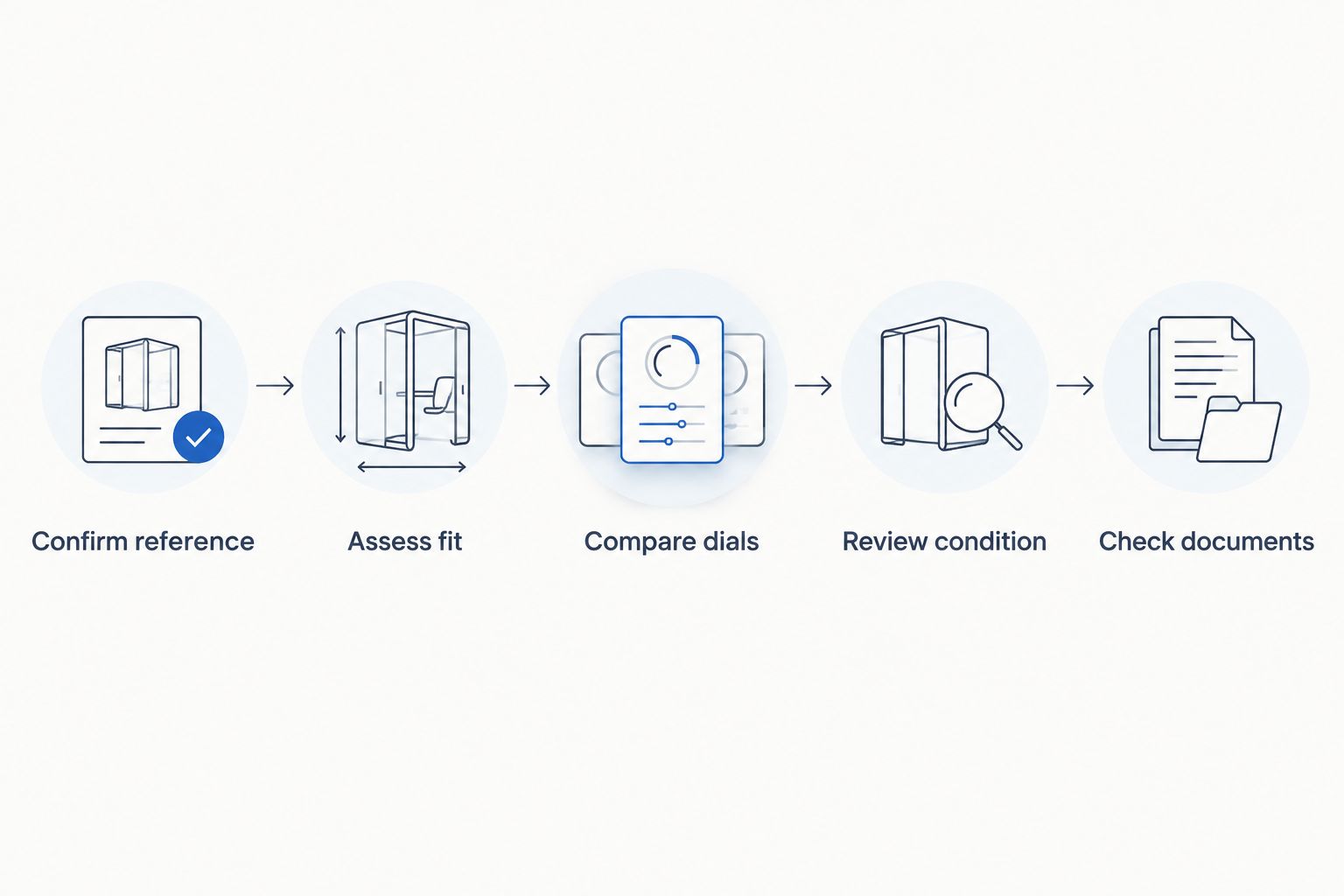
Check the watch before choosing the dial
Use this sequence when narrowing the Royal Watches Rolex Deepsea selection. It keeps an attractive dial from distracting you from a mismatch in proportions or an unanswered question about the individual watch.
- Confirm reference: Match the stated reference to the watch you are considering, rather than relying on the Deepsea name alone.
- Assess fit: Check how the case sits from above and from the side. Move your wrist and test it with your usual sleeve.
- Compare dials: Decide between black and blue/black only after the case format passes your fit assessment.
- Review condition: Examine clear images of the actual case, dial and bracelet, and ask about anything that requires clarification.
- Check documents: Establish which records accompany that individual watch and make sure identifying details are consistent.
A 2026 purchase should be assessed on the actual example offered, not just on the reputation of the reference. Keep your model preference and your assessment of the individual watch as separate decisions.
Compare the featured watches
The Royal Watches product cards below identify the three configurations discussed in this guide. Use the full reference and dial description when comparing them; “Deepsea” alone does not distinguish the steel models from the titanium Challenge.


How the ranking works
This ranking compares the supplied case dimensions, materials and dial descriptions against distinct buying priorities. The black-dial steel model takes the default position; D-Blue serves a colour-led preference; the Challenge serves an oversized titanium preference.
The order is a buying framework, not a hands-on performance score or a forecast of future resale results. Your fit assessment takes priority over the ranking.
Which Rolex Deepsea should you choose?
Choose the Rolex Deepsea 136660 Black Dial unless you have a specific reason to prefer D-Blue or the Challenge. Its place first reflects the restrained dial and smaller case diameter relative to the Challenge, not a claim that every wrist suits 44 mm.
Choose the Rolex Deepsea 136660 D-Blue if the blue/black dial is essential to your decision. Choose the Rolex Deepsea Challenge 126067 if you explicitly want titanium and a 50 mm case. If none fits comfortably, do not force the purchase simply to own a Deepsea.
FAQ
What’s the best Rolex Deepsea to choose in 2026?
The Rolex Deepsea 136660 Stainless Steel Black Dial is the default recommendation in this comparison. Choose it for a restrained black dial and a 44 mm steel case, provided the fit suits you.
Is the Rolex Deepsea D-Blue smaller than the black-dial version?
No. Both reference 136660 watches in this comparison have a listed 44 mm case diameter. Choose between them on dial preference, not an expectation of a smaller case.
How big is the Rolex Deepsea Challenge?
The Rolex Deepsea Challenge 126067 has a 50 mm case diameter. That is 6 mm larger than the two 44 mm steel Deepsea options compared here, so assess its fit separately.
Which Rolex Deepsea in this guide is made of titanium?
The Rolex Deepsea Challenge 126067 is the titanium option. The black-dial and D-Blue reference 136660 watches listed here have stainless steel cases.
Is the Deepsea Challenge the best choice for everyday wear?
The Deepsea Challenge is best for buyers who intentionally want a 50 mm titanium watch, not the default everyday recommendation. Assess wrist coverage, movement and sleeve clearance before choosing it.
Should I choose the black dial or D-Blue dial?
Choose the black dial for a restrained colour treatment and D-Blue when you specifically prefer blue/black. Both steel options here have a listed 44 mm diameter, so dial colour does not resolve fit concerns.
What should I check before buying a Rolex Deepsea online?
Check the reference, fit, actual-watch photographs, condition and accompanying documentation. Keep the appeal of the model separate from your assessment of the individual example.
One last thing
Do the sleeve test before making the dial decision. Wear the type of shirt or jacket you expect to pair with the watch, then move your wrist naturally. A specification sheet cannot tell you whether you enjoy wearing that particular case throughout your day.
The strongest 2026 choice is not automatically the deepest-rated watch. It is the Deepsea whose size, material and dial you would choose even with the technical headline removed.
Related guides
- Best Rolex Submariner watches
- Best dive watches for men in UAE
- Verifying a Rolex is authentic before buying in Dubai
- Best first Rolex model guide for UAE buyers in 2026
