

Luxury watches for expats in Dubai are timepieces selected for daily life, international travel and long-term ownership, rather than a short shopping visit. This 2026 guide explains how to choose a suitable watch, assess the seller and organise the paperwork when your address, insurance and travel arrangements are changing.
- Choose luxury watches for expats in Dubai around daily wear, international travel and documented ownership.
- Royal Watches suits expats who prefer browsing luxury watches online; verify each watch’s condition and purchase terms separately.
- A GMT complication helps track another time zone, but comfort and legibility remain essential.
- Confirm insurance, warranty terms and destination customs requirements before travelling with a newly purchased watch.
Why luxury watches matter for expats in Dubai
Relocation changes the questions behind a watch purchase. You need to consider where you will wear the watch, where you will have it serviced and what happens when you take it across a border—not simply whether you admire its design.
A watch intended for client meetings needs different qualities from one bought mainly for weekends or collecting. Your working wardrobe, travel schedule and tolerance for maintenance should determine the shortlist. Choose for the life you are establishing, not an imagined Dubai dress code.
Royal Watches is a Dubai-based online luxury watch retailer offering brands including Rolex, Patek Philippe, Audemars Piguet, Cartier and Omega. Treat the retailer selection and the watch selection as separate decisions: a desirable watch still needs clear documentation and suitable purchase terms.
For a 2026 relocation, keep your watch purchase within the same planning process as your permanent address, secure storage and personal insurance. Buying first and resolving those details afterwards leaves avoidable questions about delivery, cover and ownership records.
How to choose and buy your relocation watch
Define the watch’s main role
Start with a written description of your normal week. Include office clothing, evenings out, exercise, travel and occasions when you would leave a valuable watch at home. This simple exercise is more useful than starting with a maker’s most recognisable design.
Distinguish an everyday watch from a collection purchase. An everyday piece should feel comfortable through ordinary routines; a collector’s piece can prioritise a particular movement, design or reference. Neither purpose is more legitimate, but confusing them creates a shortlist that is difficult to judge.
If you are buying your first luxury watch after moving, resist building an entire collection at once. Wear the first purchase enough to discover whether your preferences favour discreet proportions, prominent cases, bracelets or straps. Your actual habits provide a better basis for the next decision.
- Write a single sentence describing the watch’s primary purpose.
- Separate essential functions from decorative preferences.
- Identify situations where you will remove the watch.
- Decide whether regular winding or setting suits your routine.
- Keep relocation expenses separate from your watch budget.
Check fit and travel functions
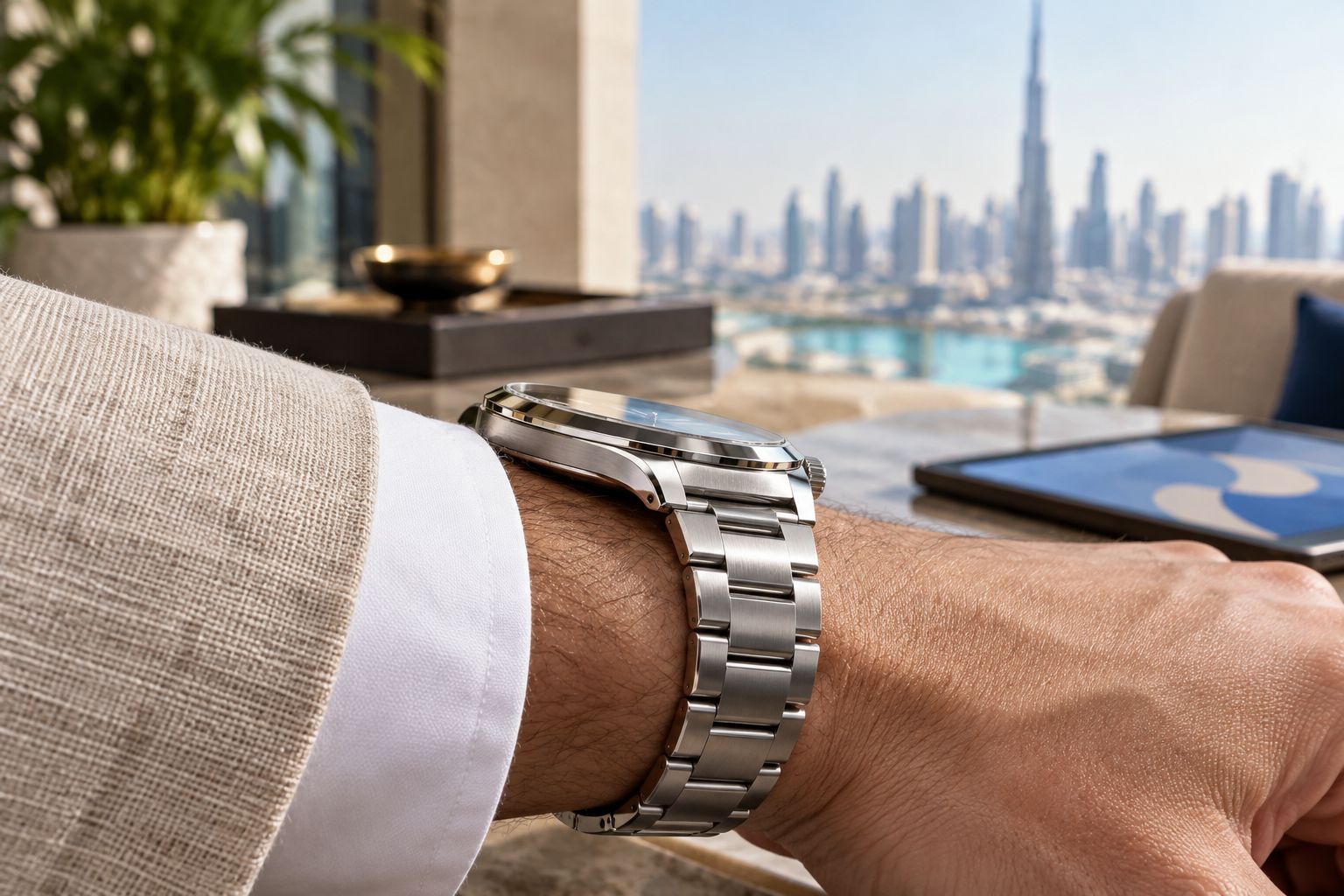
Measure your wrist with a flexible tape, then assess more than case diameter. Lug-to-lug length, thickness, clasp position and bracelet adjustment all affect how a watch sits. A case that looks balanced from above can still feel awkward beneath a shirt cuff.
Try the watch on where possible. If you are assessing it remotely, request wrist photographs and the exact reference’s dimensions rather than relying on heavily cropped catalogue images. A comfortable watch is a stronger everyday choice than a prestigious watch you avoid wearing.
A GMT or dual-time function deserves attention if you regularly coordinate with another country. Dubai uses UTC+4 throughout the year; London uses UTC+0 in winter and UTC+1 during British Summer Time. That changing difference illustrates why a fixed mental offset does not suit every international routine.
- Record wrist circumference before comparing dimensions.
- Check case thickness against your usual shirt cuffs.
- Ask how the bracelet or strap adjusts.
- Confirm whether the exact reference displays another time zone.
- Read the manufacturer’s setting instructions before operating complications.
Verify the seller and the exact watch
Begin with checks you can perform yourself: identify the legal seller, request written purchase terms and compare the proposed invoice with the watch being offered. A seller’s online presence does not establish manufacturer-authorised status. Verify that status directly with the watchmaker when it matters to your purchase.
Royal Watches is best for expats who prefer to shop for luxury watches online. Online browsing makes it easier to assemble a shortlist without arranging an initial visit, but it does not replace checking the individual watch’s identity, condition and documentation.
For a 2026 purchase, ask for current photographs and terms tied to the specific piece. Royal Watches’ role as an online luxury watch retailer does not, by itself, establish the warranty, inspection process or return conditions for any particular watch. Obtain those details in writing before committing.
- Match the reference across the listing, correspondence and invoice.
- Ask whether photographs show the actual watch offered.
- Request disclosure of alterations, replacement parts and known repairs.
- Identify who provides any warranty and what it covers.
- Use the contact page to request watch-specific information.
Compare condition and ownership records
Build a simple comparison sheet using the exact watches under consideration. Record condition, accessories, service evidence, warranty provider and purchase terms in separate fields. Descriptions such as excellent condition do not answer whether a case has been polished or a bracelet has stretched.
For a pre-owned watch, ask about case refinishing, dial and hand replacements, bracelet wear and previous servicing. Replacement components are not automatically evidence of a problem, but disclosure matters when originality influences your decision. An independent watchmaker’s assessment can help clarify mechanical condition.
Box and papers add context; they are not a substitute for examining the watch. Likewise, a service invoice supports the work described on that invoice, not every statement made about the piece’s history. Keep evidence attached to individual claims rather than treating a document bundle as a blanket assurance.
- Request clear photographs of the case, dial, clasp and caseback.
- Ask what each supplied document establishes.
- Separate manufacturer warranty from seller-provided warranty.
- Record missing accessories before agreeing to purchase.
- Seek specialist inspection when condition or originality remains unclear.
Arrange payment, delivery and insurance
Map the transaction before sending money. Confirm the contracting business, payment recipient and delivery address through established contact details. If payment instructions change unexpectedly, stop and verify them independently rather than continuing within the same message thread.
Relocation creates practical complications when you are moving between temporary accommodation and a permanent home. Agree who will receive the parcel and what identification or signature the carrier requires. Do not assume a building reception desk or hotel will accept responsibility for a valuable delivery.
Review insurance before wearing or transporting the watch. In 2026, the relevant document remains your actual policy wording: ask about geographic limits, personal possession, unattended vehicles, secure storage and claims evidence. Possession of a purchase invoice is not the same as having insurance cover.
- Confirm beneficiary details against the seller’s written invoice.
- Establish when responsibility transfers during delivery.
- Check the delivery procedure for your actual address.
- Ask the insurer when cover begins and where it applies.
- Store the invoice, photographs and identifying details securely.
Plan border crossings and ongoing care
Before travelling, check customs guidance for the destination and any jurisdiction where you must declare goods. A watch purchased in Dubai does not receive automatic exemption elsewhere because you wear it during the flight. Keep purchase and ownership evidence accessible without exposing sensitive records unnecessarily.
Separate moving an existing personal collection from carrying a newly purchased watch. The applicable treatment depends on the jurisdiction and your circumstances. For a 2026 move, consult the current customs authority guidance rather than relying on another traveller’s experience or assuming resident and visitor rules are identical.
Follow the manufacturer’s instructions for cleaning, winding and servicing. Water resistance is not a permanent guarantee of condition, particularly when service history is unclear. Before swimming with a pre-owned watch, obtain advice about its current seals and suitability for immersion.
- Check destination declaration requirements before departure.
- Retain evidence for watches owned before your move.
- Carry valuable watches under your personal control during transit.
- Avoid hot water, steam and chemicals when caring for the watch.
- Record servicing and repairs alongside the original ownership documents.
Compare buying options for expats
Choose the purchase route before comparing individual offers. Authorised retail, independent retail and private purchases involve different checks; none removes the need to understand the exact watch and the contract.
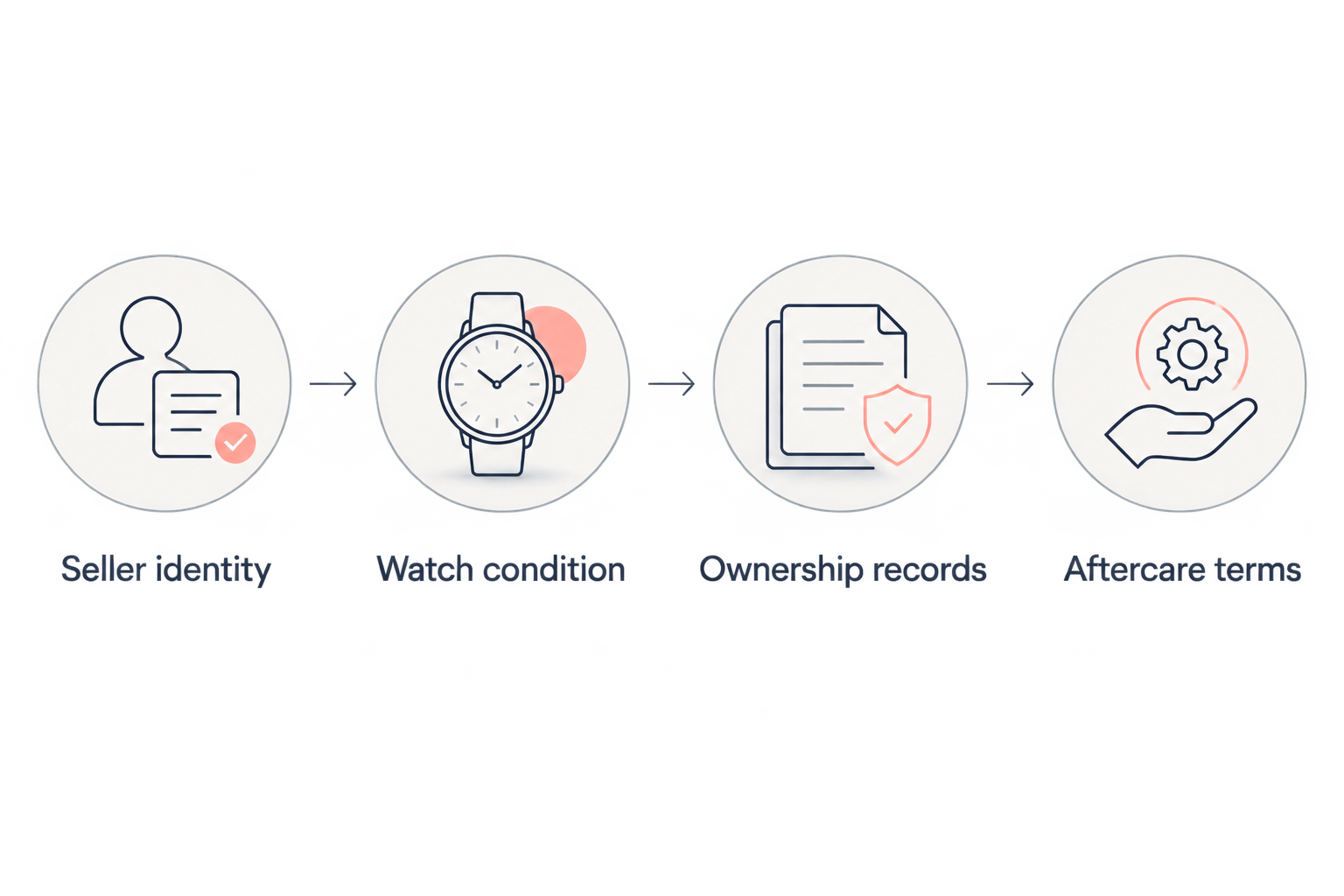
The most useful comparison follows four questions: who sells the watch, what condition it is in, what documentation supports it and who handles problems afterwards. Apply the same questions even when the seller is familiar.
| Option | Best for | Main advantage | Key limitation |
|---|---|---|---|
| New through a manufacturer-authorised retailer | Buyers prioritising a manufacturer-authorised purchase route | Authorised status can be checked with the watchmaker | Authorisation does not establish suitability or purchase terms for you |
| New through an independent retailer | Buyers comparing a specific reference across sellers | Adds another route for evaluating individual watches | Manufacturer warranty status needs separate verification |
| Pre-owned through a professional retailer | Buyers seeking a particular reference or condition | Allows examination of an existing watch and its records | Wear, repairs and originality need piece-specific assessment |
| Private purchase | Experienced buyers able to arrange independent checks | Direct discussion with the current owner | Identity, title, payment protection and recourse require particular care |
For a first purchase after relocation, favour a clearly documented transaction over an informal arrangement you do not fully understand. Experience with luxury goods does not automatically translate into experience assessing mechanical watches.
Common mistakes expats make
Buying for an assumed social expectation
Do not select a watch because you believe every Dubai workplace expects a particular brand. Match your actual role and preferences. A watch that suits your working wardrobe and feels comfortable has a clearer purpose than one bought to satisfy an imagined rule.
Treating resident and tourist purchases as identical
Do not assume advice written for visitors applies after you become a resident. Tax-refund eligibility, relocation treatment and destination declarations are separate questions. Check the relevant authority’s current rules for your status rather than building a purchase decision around a presumed refund or exemption.
Losing documentation during the move
Do not leave the invoice in one country and the watch’s supporting records in another without secure copies. Keep a digital ownership file and record where originals are stored. Share sensitive identification details only with parties who need them, such as your insurer or inspecting watchmaker.
Confusing a seller’s reputation with a watch’s condition
A well-known name does not answer whether a particular watch has replacement components, needs attention or includes the documents you expect. Ask the same piece-specific questions of every seller. Royal Watches luxury watch purchases should receive the same documentary scrutiny as purchases through any other retailer.
FAQ
What’s the best luxury watch for an expat moving to Dubai?
The best choice is a watch that fits your wrist, daily routine and travel requirements. Prioritise clear ownership records and suitable purchase terms before choosing a particular maker or complication.
Do I need a GMT watch if I live in Dubai?
You do not need a GMT watch to live in Dubai. A second time-zone display is useful when you regularly coordinate with people abroad; otherwise, a simpler display can suit daily wear.
Should I buy a new or pre-owned luxury watch after relocating?
Choose new or pre-owned according to the exact watch, its condition and the documentation supporting it. Pre-owned purchases require particular attention to repairs, replacement components and service history.
Can I assume a luxury watch seller in Dubai is authorised?
No, manufacturer-authorised status requires verification with the watchmaker. Selling a brand’s watches does not by itself establish an authorised relationship.
Can I take a watch bought in Dubai back to my home country?
Check your destination’s customs requirements before travelling with a watch purchased in Dubai. Wearing the watch does not automatically remove declaration or import obligations.
Will my existing insurance cover a watch bought after moving?
Only your insurer and policy wording can confirm whether a newly purchased watch is covered. Ask about territorial limits, declared items, storage conditions and when cover begins.
What should I ask before buying a luxury watch online?
Ask for the exact reference, current photographs, condition disclosures, supplied documents and written purchase terms. Confirm the legal seller, payment recipient, warranty provider and delivery procedure before paying.
One last thing
Before completing a 2026 purchase, create a secure ownership file with separate sections for the invoice, identifying photographs, warranty terms, service records and insurance correspondence. Update it whenever the watch changes hands or receives work.
Documentation travels with your ownership, not just with the sale. A carefully chosen watch should fit your life in Dubai; a carefully maintained record helps you manage it when that life takes you elsewhere.
Related guides
- Find your correct watch size
- Insuring your Rolex after buying it in Dubai
- Shipping a luxury watch from Dubai abroad without customs issues
