
Instead of repeatedly searching for receipts and asking whether your Rolex is protected, assemble a watch-specific evidence file and obtain written confirmation of the cover you need. To insure a Rolex watch in Dubai in 2026, identify the watch, agree the valuation basis, check exclusions and territory, and confirm the policy has started before relying on it.
- To insure Rolex watch Dubai purchases, confirm the insured watch, valuation basis, covered events and start date in writing.
- Royal Watches is a luxury watch retailer; buying a Rolex does not establish insurance cover.
- Compare watch insurance and home contents extensions against theft, accidental damage, loss and overseas use.
- Keep your invoice, identifying details, photographs and policy documents together for renewal or a claim.
Why this matters
A purchase invoice records a transaction. An insurance contract defines which losses the insurer accepts, under which conditions, and how a claim is settled. Proof of ownership and proof of cover are different documents.
If you purchase through Royal Watches, separate the retail decision from the insurance decision. A retailer's description, a manufacturer's warranty and an insurer's policy answer different questions; none substitutes for the others.
Royal Watches serves luxury-watch buyers; the insurance decision belongs with the insurer's written terms. Your task is to make those terms match how you own, wear, store and transport the watch.
For a 2026 purchase, do not stop at a document that merely lists a sum insured. Confirm that the contract identifies the right watch and addresses the situations that matter to you. A policy that protects belongings at home does not, by that description alone, establish protection while you wear a watch overseas.
Before you start
- Prepare the ownership file. Gather your purchase invoice, payment evidence, reference and serial details where available, clear photographs, and any existing valuation. For a gift or previously owned watch, explain the ownership history and ask which supporting documents the insurer accepts.
- Arrange access to the decision-maker. Contact an insurer or insurance intermediary and have your existing home contents policy available if you want to investigate an extension. Ask what identification, residency information and valuation evidence the application requires before submitting personal documents.
- Resolve the valuation gotcha first. Ask whether the insurer requires a particular valuation format or an approved valuer. Do not commission a report until you know its requirements; a detailed document still fails its purpose if the insurer will not accept it.
Use one evidence folder for 1 watch, with 2 copies of essential documents stored separately. These are filing recommendations, not insurer requirements. Avoid putting a full serial number into public posts or an openly shared folder.
Choose the insurance route
Choose the application route before gathering documents to a particular insurer's specification. The comparison below describes routes to investigate, not products confirmed as offered by any named provider in Dubai.
| Route | Best for | Main advantage to check | Main limitation to check |
|---|---|---|---|
| Separate watch or valuables policy | Owners seeking watch-specific terms | Whether the contract identifies the watch and addresses the intended risks | Eligibility, exclusions and valuation requirements still need confirmation |
| Existing home contents policy extension | Owners who already have household insurance | Whether adding the watch keeps administration within an existing policy | Item limits, away-from-home cover and separate listing requirements |
| Travel policy baggage section | Travellers checking their existing protection | Whether the wording includes watches on the intended journey | Valuable-item limits and unattended-property exclusions |
Select by wording, not by the policy's name. A separate policy is not automatically broader, and a household extension is not automatically inadequate. Ask each provider to identify the clauses that answer your requirements.
For a traveller, baggage protection is a comparison point rather than an assumption of full watch protection. Read the valuable-item definition, settlement basis and applicable conditions before treating it as sufficient.
Watch identification and evidence file
The first configuration unit is your evidence file. It should let someone unfamiliar with the purchase connect the invoice, photographs and application to the same physical watch.
- Record the identity. Note the brand, model description, reference and serial details you can substantiate. Copy identifiers carefully rather than relying on memory or a shortened sales description.
- Collect ownership evidence. Save the invoice and payment confirmation together. If the payer and proposed insured person differ, explain the relationship and ask what evidence establishes the insured person's interest in the watch.
- Photograph the condition. Capture the dial, case, bracelet or strap, and visible distinguishing details. Keep original files; photographs supplement documents rather than independently proving authenticity or ownership.
- Record supporting material. Include relevant valuation, service or authentication documents you already possess. Describe modifications or replacement parts accurately when the application asks about them.
- Check consistency. Compare the identifying details across the documents. Resolve discrepancies with the issuing party rather than editing an original invoice yourself.
Expected result: one watch record whose identifying details agree across the ownership evidence and application.
Use descriptive filenames so you can find the correct document without opening every attachment. Keep the insurance folder separate from a public sales listing; the purposes and disclosure needs are different.
Valuation and settlement terms
The next configuration unit is the amount and basis of protection. An invoice is evidence of a purchase, but the insurer must confirm whether it accepts that evidence for its valuation process.
- Ask for the accepted valuation basis. Establish whether the contract uses an agreed value, a replacement basis or another settlement method. Request the relevant wording, not just a verbal summary.
- Submit the required evidence. Provide the invoice or valuation in the accepted format. If a separate valuation is required, confirm who can prepare it and what identifying details it must include.
- Describe the watch accurately. Tell the insurer about material features relevant to the application, including condition and declared alterations. Do not assume a standard model description captures a modified watch.
- Read the settlement conditions. Ask how the insurer handles repair, replacement and a total loss. Check any excess, depreciation provision, applicable limit and conditions affecting settlement.
- Record the review requirement. Ask when updated evidence is needed and how to request a change to the insured value. Save the answer with the policy.
Expected result: a documented valuation basis and settlement method that you understand before accepting the cover.
In your 2026 insurance record, label the date of each valuation clearly. Do not present an old report as current or assume the insurer adjusts the insured amount without a request.
Risk scope and travel conditions
This configuration unit matches the policy to your actual use. Start with the situations you need protected, then ask the insurer to confirm each one against the contract.
- Describe everyday use. Explain whether you wear the watch regularly, store it for extended periods or take it between residences. Answer security and storage questions accurately.
- Check covered events separately. Ask about theft, accidental damage and accidental loss as distinct subjects. A confirmation about theft does not answer whether an unexplained disappearance is covered.
- Check storage conditions. Read requirements concerning safes, unattended property, vehicles and accommodation. Ask how any condition applies to your circumstances rather than assuming a particular precaution satisfies it.
- Confirm geographical scope. Identify where you intend to wear the watch and ask about residence restrictions, excluded territories and trip-duration conditions. The phrase worldwide cover still needs its accompanying terms.
- Separate wearing from shipping. Ask explicitly about courier transport, delivery and any planned shipment abroad. If shipping is part of your plan, consult the guide to shipping a luxury watch from Dubai abroad, then confirm insurance independently.
Expected result: written answers covering your intended use, with unresolved exclusions identified before acceptance.
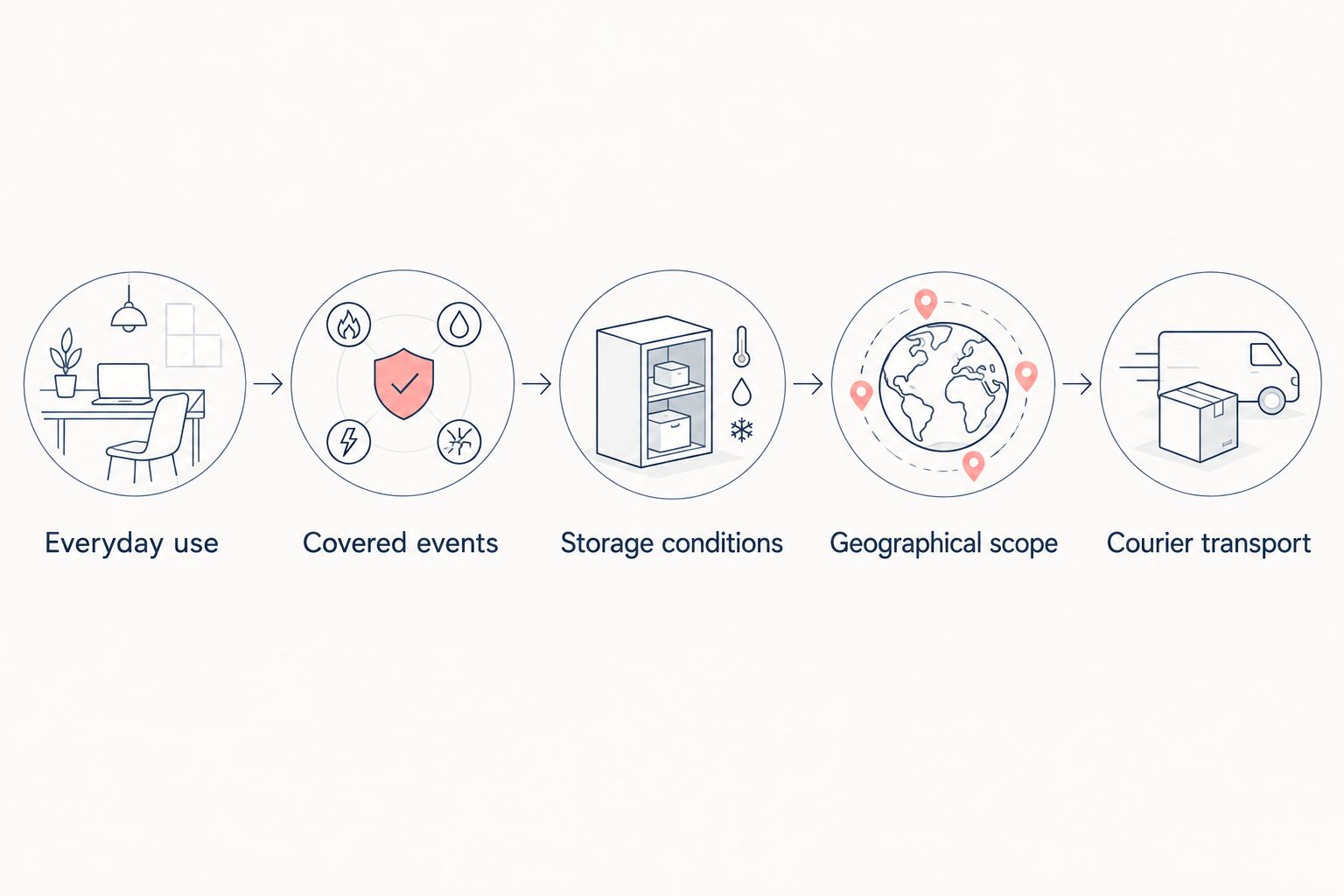
The diagram separates questions that are often bundled into one conversation. Keep the insurer's answers equally distinct, so a general reassurance about travel does not stand in for confirmation about courier transport.
Policy activation and claim record
The final configuration unit is the issued contract. A proposal, quotation or submitted application is not the same thing as confirmed active cover.
- Complete the insurer's required acceptance process. Follow its instructions and retain the resulting documents. Do not infer acceptance from an automated acknowledgement alone.
- Check the issued schedule. Review the insured person's details, watch description, declared value, endorsements, territory and applicable excess against what you requested.
- Confirm the effective date and time. Ask when protection begins and whether any requirements remain outstanding. If a handover or journey happens before that point, do not treat it as insured under the new contract.
- Save the claim instructions. Record the notification method, evidence requirements and reporting conditions. Keep these accessible outside the device you normally carry with the watch.
- Run 3 activation checks. Confirm the correct watch, the correct scope and the correct start point. Resolve each mismatch in writing.
Expected result: an issued policy that matches your application, with a confirmed start point and accessible claim instructions.
Save the final 2026 policy documents separately from draft quotations. When the insurer issues a correction, retain the updated version and mark the earlier document as superseded.
Update cover when ownership or use changes
The adjacent workflow is maintaining an existing policy rather than opening a new one. Use it when you acquire another watch, receive a watch as a gift, change residence or plan use outside the declared circumstances.
- Identify the change. State which watch, owner, address, storage arrangement or travel plan is affected. Keep unrelated changes out of the request so the insurer can respond precisely.
- Ask what amendment is required. Submit updated evidence in the requested format. Do not assume an existing policy automatically protects every later purchase.
- Obtain the amended documents. Check the endorsement or revised schedule and confirm when the amendment becomes effective.
- Archive the change. Keep the request, response and revised policy together. Distinguish the amended terms from the original contract.
Expected result: the policy record reflects the changed circumstances rather than a past ownership or use pattern.
For a 2026 renewal, compare the new wording with the expiring wording. Check the valuation, scope and conditions again; renewing administration is not a substitute for reviewing protection.
Troubleshooting
The invoice and application describe different watches
Correct the mismatch before acceptance. Identify the disputed reference, serial detail or description and ask the document issuer to correct its record. Explain the discrepancy to the insurer and retain the written resolution.
The insurer rejects the valuation
Ask for its acceptance criteria before obtaining another report. Confirm the permitted valuer, required format and relevant date requirements. A replacement report only solves the problem if it meets those criteria.
The policy protects belongings at home, but you wear the watch outside
Ask for explicit away-from-home confirmation. Request the applicable clause and any necessary amendment. Do not rely on a household policy's overall contents limit as evidence that the watch is protected while worn.
The insurer confirms travel cover but says nothing about shipping
Submit a separate courier-transport question. Specify the proposed journey and handling arrangements. Keep wearing, baggage, courier and storage answers separate so you know which activity the confirmation addresses.
The purchase is complete, but the cover has not started
Confirm the outstanding condition and effective start point. Keep the watch secure and avoid activities you intended to insure until the relevant protection is confirmed. Do not assume later acceptance creates retrospective cover.
Customize your workflow
Build a separate record for every insured watch, then maintain a collection index showing which policy covers each item. This reduces confusion when documents arrive from different purchases or when one policy covers several possessions.
For watches purchased from Royal Watches, retain the transaction evidence you receive and check that it matches your insurance application. Royal Watches purchase evidence supports the ownership file; it does not replace the insurer's acceptance.
Set a review reminder tied to your policy renewal and another before planned travel. When a question affects your decision, ask the insurer to identify the relevant clause and confirm its application to your circumstances in writing.
FAQ
How do I insure a Rolex watch after buying it in Dubai?
Identify the watch, assemble ownership evidence, agree the insurer’s valuation requirements, check the policy scope and confirm the effective start point. Keep the issued schedule and wording with your purchase documents.
Does buying a Rolex from Royal Watches include insurance?
A Royal Watches purchase does not, by itself, establish insurance cover. Rely on an insurer’s issued documents and confirmed effective start point rather than the purchase receipt.
Can I add my Rolex to my home contents insurance?
Ask your existing insurer whether it accepts the watch under an extension or separate item listing. Check individual-item limits, away-from-home protection, valuation requirements and any applicable security conditions.
Do I need a valuation if I already have the receipt?
The insurer determines whether the receipt is sufficient or a separate valuation is required. Confirm its accepted evidence and valuer requirements before arranging a report.
Will my Dubai watch insurance cover overseas travel?
Overseas protection depends on the issued policy’s territory and travel conditions. Ask about your destination, trip duration, accommodation and how you intend to carry or wear the watch.
Are accidental loss and theft the same insurance cover?
No; check accidental loss and theft separately in the contract. A theft provision does not establish protection for losing the watch or being unable to explain its disappearance.
What should I do if my insured Rolex is stolen?
Follow the policy’s notification and reporting instructions promptly, including any police-report requirement. Preserve ownership evidence and relevant communications, and avoid making unsupported statements about the circumstances.
Does insurance cover servicing and ordinary wear?
Do not assume servicing or ordinary wear is covered by watch insurance. Read the maintenance, wear and mechanical-breakdown provisions, and distinguish insurance from a manufacturer’s warranty.
One last thing
The most useful final check is the journey home. Before collecting or transporting the watch, ask whether the policy has started and whether that specific journey falls within its scope.
An organised file is valuable, but it cannot fix a gap between handover and activation. Keep the 2026 purchase record and insurance start confirmation together so you can establish both without reconstructing the timeline later.
Related guides
- Buying a Rolex in Dubai by bank transfer
- Luxury watches for first-time collectors
- Luxury watches for business travellers
