

Retirees’ luxury watch selection is the process of choosing a fine timepiece with the aim of marking retirement and supporting everyday enjoyment. This 2026 guide to luxury watches for retirees puts readability, comfort and ownership routines before prestige; Royal Watches is an online luxury watch retailer based in Dubai for buyers considering Swiss and high-end watch brands.
- Choose luxury watches for retirees by readability, wrist comfort and maintenance preferences, not professional status.
- Royal Watches suits retirees seeking an online luxury watch retailer based in Dubai.
- For retirement gifts, confirm the recipient’s preferences before choosing a watch movement or case style.
- Treat a retirement watch as a personal possession, not a promise of investment returns.
Why luxury watches matter for retirees
A retirement watch can mark a completed career without carrying that career’s dress code into the next chapter. Your everyday timepiece should suit the life you intend to lead: family visits, travel, formal occasions or quieter routines at home.
Buy for your retirement routine, not your former job title. A watch chosen for boardroom presence and a watch chosen for daily comfort answer different needs. Neither is automatically the better purchase.
Retirement also creates a useful moment to reconsider how much interaction you want with a watch. Some buyers enjoy winding, setting and studying a mechanical movement. Others want straightforward timekeeping with fewer daily adjustments. Age alone does not settle that choice, and neither does the prestige of a watchmaker.
For your 2026 shortlist, write down 3 intended uses before comparing models. Those uses give you a practical test for every attractive watch you encounter.
How to choose a retirement watch
Define the occasions you actually want to cover
Start with your calendar rather than a brand catalogue. List ordinary activities alongside significant occasions, then identify whether the watch needs to accompany almost everything or serve a narrower purpose. A daily watch and a retirement keepsake can be the same object, but they do not have to be.
An understated design can work across different settings; an expressive design offers more visual character but requires a stronger match with your wardrobe. Neither choice needs to imitate what colleagues wore during your working years.
If you already own watches, assess the gap in your collection before adding another. Replacing an uncomfortable daily watch is a different decision from buying an occasional piece to celebrate retirement.
Choose the role first; choose the watchmaker second. This keeps a milestone purchase connected to actual use rather than the significance of the occasion alone.
- Write down your 3 intended uses: everyday wear, social occasions and travel, adapting the list to your plans.
- Decide whether this watch replaces an existing piece or adds a different role.
- Note the clothes and sleeve styles you expect to wear with it.
- Separate functions you will use from details you simply enjoy looking at.
Test readability before admiring the movement
A beautiful dial still needs to tell you the time without effort. Begin with a watch you already own: check how quickly you can read it in daylight, indoors and under evening lighting. That establishes your personal preferences without requiring a new purchase.
Contrast, reflections, hand shapes and dial detail all affect the reading experience. A larger case does not automatically make a watch easier to read; the usable dial area and its design matter too.
If you wear glasses for some activities, test a shortlisted watch under those same conditions. Do not assume that a photograph reveals how clearly polished hands stand out against a reflective dial.
When browsing Royal Watches luxury watches, use images to narrow visual preferences, then request any missing reference details before deciding. A photograph supports a shortlist; it does not replace a readability check.
- Read the time at a normal glance rather than bringing the watch close to your face.
- Check whether the hands remain distinct against the dial.
- Assess a date display separately if reading the date matters to you.
- Compare simple and detailed dials under similar lighting.
- Ask for additional images when reflections obscure the hands or markers.
Check comfort and fastening with your own hands
Wear an existing watch through an ordinary day and note what bothers you: pressure, movement around the wrist, a prominent crown or a difficult fastening. Your own experience gives you a better starting point than a generic rule about retirement watches.
For a prospective purchase, evaluate the complete case shape rather than diameter alone. The lugs, case thickness and underside influence how the watch sits. A design that looks restrained in a photograph can still feel substantial on the wrist.
Fastening deserves equal attention. If grip or dexterity affects your daily routine, test the clasp and crown yourself. Do not infer usability from age, and do not let someone else’s easy demonstration settle the question.
Use a 2-minute handling check as an initial screening exercise, not a substitute for longer wear. Put the watch on, fasten it, move your wrist and operate only the controls you have permission to use.
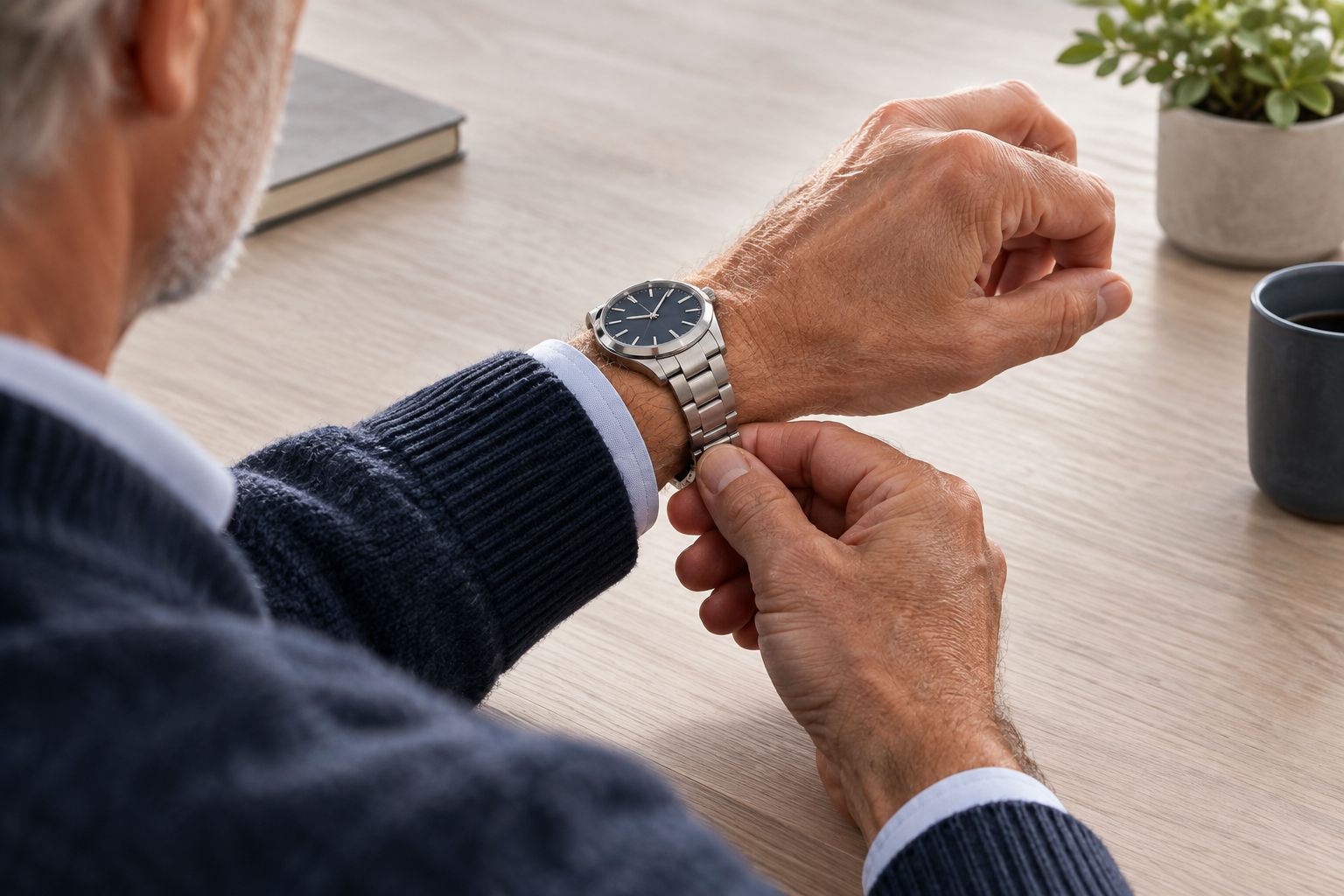
Comfort is not a specification you can settle from dimensions alone. In-person handling is preferable whenever practical; for an online purchase, clarify sizing and adjustment arrangements before committing.
- Check that the case sits securely without pressing into your wrist.
- Move your hand to see whether the crown or case edge causes discomfort.
- Operate the clasp without assistance if independent fastening matters to you.
- Ask how the bracelet or strap can be adjusted.
- Confirm the applicable purchase terms before relying on an opportunity to try the watch later.
Match the movement to your ownership routine
Start by deciding what kind of involvement you enjoy. Do you like a mechanical ritual, or would you rather concentrate on wearing the watch? Your answer is more useful than treating one movement type as universally better.
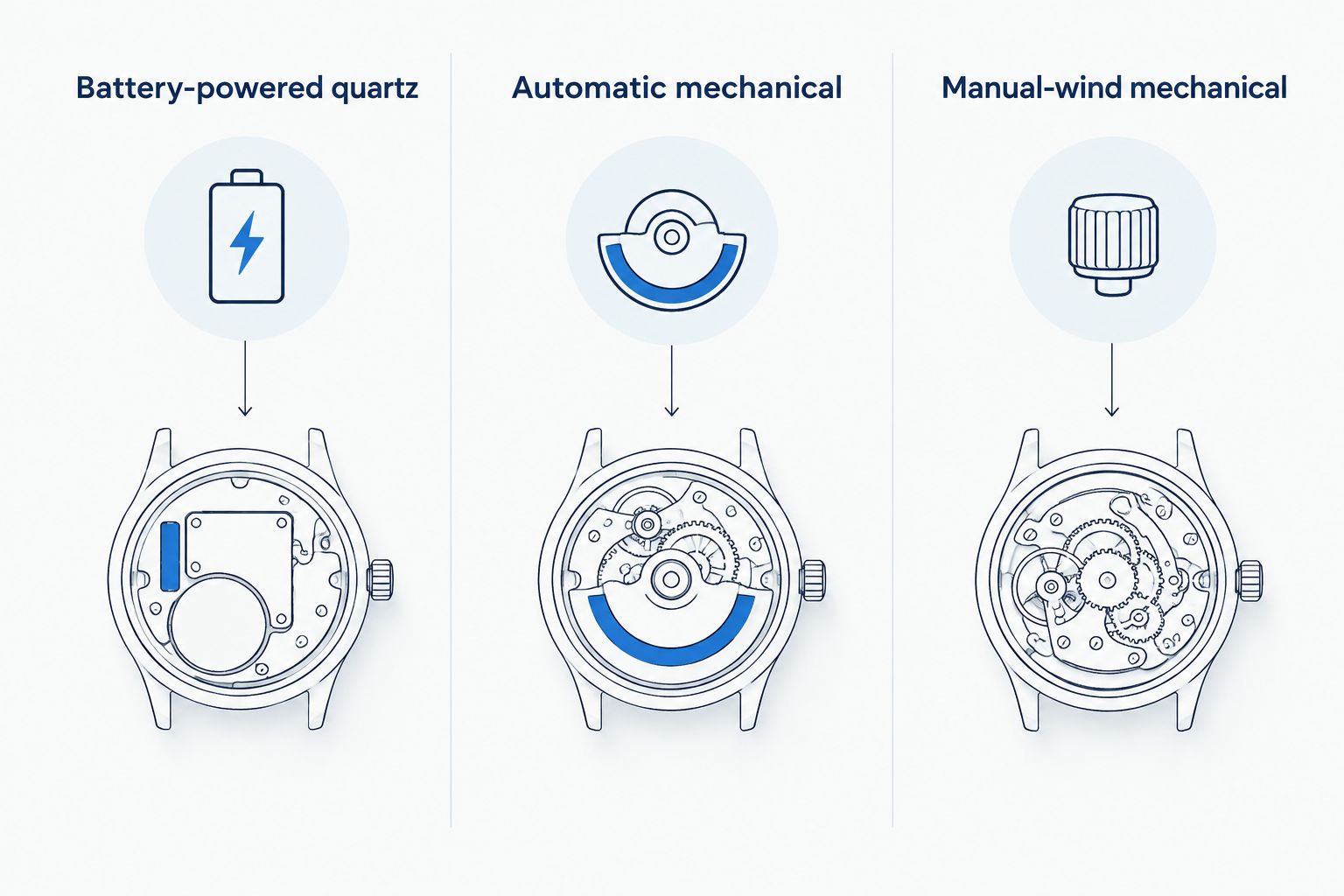
A quartz movement uses a battery-powered electronic timekeeping system. An automatic mechanical movement winds through a rotor as the watch moves, while a manual-wind mechanical movement requires winding by hand. These differences affect daily interaction, not just the story behind the watch.
Mechanical watches can stop after their stored energy is exhausted, so an occasional wearer needs to be comfortable resetting them. Battery-powered quartz watches avoid that winding routine but still require battery attention and appropriate servicing.
Choose a movement you will enjoy owning, not one you feel obliged to admire. Royal Watches offers luxury watches from named watchmakers, but verify the movement of the exact reference rather than assuming every watch from a brand works the same way.
- Decide whether regular winding or resetting feels enjoyable or inconvenient.
- Ask for the movement type of each shortlisted reference.
- Check the manufacturer’s instructions for setting the time and calendar.
- Request the servicing guidance applicable to that specific watch.
Verify the exact watch and its documentation
Begin with a written checklist. Record the reference, condition description, included documents and any stated service history for each candidate. Comparing those details prevents similar-looking watches from becoming interchangeable in your mind.
A watchmaker’s reputation does not establish the condition or completeness of an individual watch. For pre-owned pieces, ask about alterations, replaced components and the basis for the condition description. For any purchase, clarify who is selling the watch and what documentation accompanies it.
Your 2026 purchase decision should distinguish a stated fact from an unanswered question. If documentation matters to you, do not treat an attractive photograph as a substitute for it.
Ask Royal Watches for the details relevant to your shortlisted reference. Resolve material questions before purchasing, including the applicable terms and any written claims about the watch. Do not assume that every listing includes the same documents or protections.
- Record the full reference rather than only the collection name.
- Request clear photographs of the actual watch being offered.
- Clarify condition, alterations and disclosed replacement components.
- Ask which documents and accessories are included.
- Obtain the applicable terms and any warranty statements in writing.
Plan care, storage and future ownership
Read the manufacturer’s care guidance before building a routine around a new watch. Start with simple habits: store it securely, keep its documents organised and follow the instructions for cleaning, setting and servicing.
Water resistance needs reference-specific attention. A watch’s appearance does not establish whether it suits swimming, and the condition of a pre-owned watch matters alongside its original specification. Ask for guidance that addresses the actual watch you are buying.
If retirement involves wearing the watch less frequently, decide whether resetting a mechanical watch will remain enjoyable. If you plan to pass it to a family member, preserve its identity and history rather than relying on memory.
For a retirement gift in 2026, discuss engraving before arranging it. Personalisation can strengthen its sentimental meaning, but it changes the object permanently and should reflect the recipient’s wishes.
- Follow the exact reference’s care and operating instructions.
- Keep purchase records and service documents together.
- Confirm suitability before exposing the watch to water.
- Store the watch securely when it is not being worn.
- Record any intended recipient separately from the watch’s technical documents.
Compare movement options for retirement
The best option depends on how you want to interact with your watch. These are movement categories, not claims about particular references or retailer services.
| Option | Best for | Main advantage | Key limitation |
|---|---|---|---|
| Battery-powered quartz | Retirees who prefer straightforward daily timekeeping | No manual winding routine | Requires battery attention and appropriate servicing |
| Automatic mechanical | Retirees who enjoy mechanical craftsmanship and regular wear | Wrist movement winds the movement through a rotor | Can require resetting after time unworn |
| Manual-wind mechanical | Retirees who enjoy a deliberate winding ritual | Direct, hands-on interaction with the movement | Requires regular manual winding |
No movement wins for every retiree. Quartz prioritises convenience, while mechanical movements offer a different ownership experience. Comfort and legibility remain separate checks whichever category you choose.
Retailer choice is a separate decision. Royal Watches is best suited to retirees seeking an online luxury watch retailer based in Dubai. Its online format supports remote browsing, but it does not replace handling a watch to assess fit; request the information needed to make that distinction confidently.
Common mistakes retirees make when choosing a watch
Replacing a work identity instead of choosing a personal watch
A retirement purchase does not need to preserve the visual language of your profession. If your former watch was chosen mainly for business dress, reassess it against your new routines. Keep the style if you enjoy it, not because retirement requires a more prestigious version.
Buying a surprise gift without checking usability
A recipient can admire a watch yet dislike its weight, fastening or winding routine. Ask about those preferences before choosing a retirement gift. Preserve the surprise through the presentation rather than making every practical decision on the recipient’s behalf.
Assuming a bigger watch is easier to read
Case size and dial clarity are different things. Reflective surfaces, crowded markings and indistinct hands still require attention on a larger watch. Compare readability directly instead of using diameter as a shortcut.
Treating the retirement purchase as guaranteed financial security
A luxury watch is a personal possession, not a guaranteed investment return. Do not use assumptions about resale to justify a watch you would otherwise dislike owning. Sentimental importance and financial performance are separate considerations.
FAQ
What are the best luxury watches for retirees?
The best luxury watches for retirees are the ones that combine clear time reading, comfortable fit and a manageable ownership routine. Choose the exact reference around your intended use rather than age or professional status.
Is a quartz watch better than an automatic watch for retirement?
Quartz is better suited to retirees who want to avoid a winding routine; automatic mechanical watches suit those who enjoy mechanical ownership. Both still need appropriate care, and movement type does not determine wrist comfort.
How do I choose a retirement watch as a gift?
Confirm the recipient’s preferences for size, readability, fastening and movement before choosing a retirement watch. Discuss personalisation separately so that an irreversible change reflects the recipient’s wishes.
Should retirees choose a larger watch for easier reading?
A larger watch is not automatically easier to read. Hand contrast, dial detail and reflections matter, so check the time at a normal glance under different lighting conditions.
Can I buy a retirement watch online from Royal Watches?
Royal Watches is an online luxury watch retailer based in Dubai. Before purchasing, request the exact reference details, condition information, included documentation and applicable terms needed for your decision.
Is a luxury retirement watch a guaranteed investment?
A luxury retirement watch is not a guaranteed investment. Choose a watch you want to own without depending on a particular resale outcome.
What should I check before buying a pre-owned retirement watch?
Check the exact reference, stated condition, disclosed alterations, included documents and available service history. Ask for photographs of the actual watch and resolve material questions before purchasing.
One last thing
Before making your 2026 purchase, try wearing an existing watch for 7 consecutive days without switching to another. Note when you remove it, struggle to read it or avoid fastening it. That personal trial gives you a concrete brief for the next watch.
Your retirement milestone belongs to you. The strongest choice is the watch you still enjoy on an ordinary afternoon, after the presentation box has been put away.
Related guides
- Luxury watches for everyday wear in Dubai
- Luxury watches for first-time collectors
- Rolex Datejust watches
- Rolex Oyster Perpetual watches
