
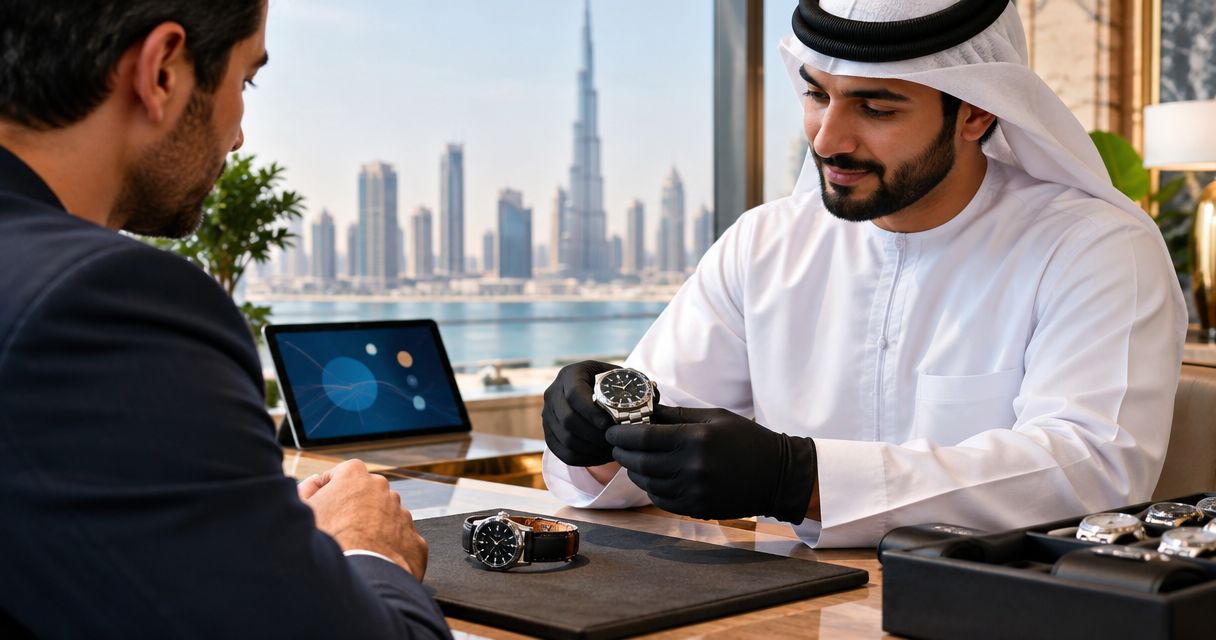
Instead of repeatedly describing your old watch to dealers, prepare one condition file and use it to request a written assessment, confirm the replacement watch, and document the exchange. For a watch trade in Dubai in 2026, confirm the dealer accepts your reference before arranging inspection or handing over the watch.
- A watch trade in Dubai starts with dealer acceptance, not a replacement-watch order.
- Royal Watches is best for luxury watch buyers who want to shop online.
- Separate the initial assessment from the final inspection-based offer.
- Record both watch references, the settlement terms, and the handover conditions before signing.
Why this matters
A watch exchange combines two decisions: disposing of your existing timepiece and buying its replacement. Approve each decision separately before agreeing to the combined transaction. An appealing replacement does not resolve questions about the old watch's condition, ownership records, or inspection outcome.
Royal Watches is best for luxury watch buyers who want to shop online. Browsing Royal Watches for luxury watches is separate from confirming whether a dealer accepts a trade-in; ask that question directly before planning an exchange.
This 2026 workflow gives you a repeatable way to organise the information, inspect the proposed replacement, and retain a clear transaction record. It does not depend on a particular dealer portal or an assumed trade-in programme.
Before you start
- Prepare ownership and identification records. Gather your purchase invoice, relevant watch paperwork, service records, and identification for any verification the receiving business requires. Describe missing documents accurately rather than treating an incomplete set as complete.
- Prepare the watch and its accessories. Collect the box, papers, spare bracelet links, and other items you intend to include. Take 6 photographs: dial, caseback, each case side, bracelet or strap, and clasp. Photograph accessories separately.
- Confirm the inspection conditions before delivery. Ask who receives the watch, who inspects it, whether any work requires your permission, and how it is returned if you decline. The critical distinction is between an initial assessment from photographs and an offer issued after physical inspection.
Do not open the case or attempt cosmetic restoration to improve the submission. Report visible wear and known service history; leave technical inspection to a qualified watch professional.
Configuration unit: Your watch record
Build a reusable condition file
- Identify the watch precisely. Record the maker, model, reference, and serial information from reliable documents or markings. If a detail is uncertain, mark it as unconfirmed rather than copying a similar watch's specification.
- Describe the condition plainly. Note scratches, dents, bracelet wear, damaged components, and any known operating issue. State whether the watch runs, but do not describe it as mechanically sound solely because the hands move.
- List the included items. Separate original paperwork from later service documents. Identify spare links and accessories so the receiving dealer knows exactly what belongs to the submission.
- Record known interventions. Disclose polishing, replacement components, repairs, or modifications you know about. If the service history is unknown, say so; an absence of records is not proof that a watch has never been serviced.
- Prepare a shareable copy. Use clear filenames and a concise summary. Keep an unedited private copy, and avoid posting complete serial information or personal documents publicly.
Expected result: You have one consistent description that can accompany every enquiry. Each dealer receives the same condition account and accessory list, making differences between responses easier to understand.
Keep the file factual. A statement such as visible scratches on the clasp communicates more than excellent condition, which leaves the reader to guess what you mean. Photographs support disclosure; they do not replace physical inspection.
Protect the ownership record
Share identity documents through a channel you have verified with the receiving business. Confirm the recipient before sending sensitive information, especially when an enquiry moves from a website to messaging or email.
Retain the original documents until the handover terms specify what transfers with the watch. Where a document also contains unrelated personal information, ask what information the recipient actually needs.
Configuration unit: Dealer assessment
Confirm acceptance and inspection terms
- Ask about the exact reference. Request confirmation that the dealer will consider your watch for an exchange. Acceptance of a brand does not establish acceptance of every reference, condition, or documentation history.
- Send the condition file. State what you want to achieve: exchange the existing watch toward a replacement, or obtain a separate purchase assessment. Do not let the recipient infer the transaction type.
- Clarify the status of the response. Ask whether the assessment is preliminary, what inspection remains outstanding, and what findings would change the proposed terms.
- Agree on custody conditions. Establish who takes possession, where inspection occurs, how receipt is recorded, and what happens if either party declines the transaction.
- Request written terms. Include any inspection charges, return arrangements, permission requirements for opening the watch, and the conditions for accepting or rejecting the final offer.
Expected result: You know whether the dealer will consider the watch and what happens before a binding exchange. Do not treat an informal expression of interest as an agreed transaction.
For your 2026 enquiry, keep the response date beside the assessment. If the replacement changes or you delay the exchange, ask the dealer to reconfirm the terms rather than relying on an earlier conversation.
Choose the transaction route
Best for a coordinated exchange: a dealer trade-in with written acceptance terms. Its advantage is linking the outgoing watch and replacement in one agreed process; its limitation is that your decision depends on the dealer accepting both sides of that transaction.
Best for independent decisions: selling the existing watch separately. This separates disposal from replacement selection, but you must manage two transactions and their respective paperwork.
| Route | Best for | Main advantage | Main limitation | Confirm before proceeding |
|---|---|---|---|---|
| Dealer trade-in | Buyers seeking a coordinated exchange | Connects disposal and replacement in one agreement | Depends on acceptance of the old watch and agreement on the replacement | Final inspection outcome and exchange conditions |
| Separate sale, then purchase | Buyers who want independent decisions | Keeps the sale separate from replacement selection | Requires separate counterparties or transaction records | Sale completion and the later purchase terms |
Neither route removes the need to verify the replacement. Choose the process that fits your priorities, not simply the one described as easiest.
Configuration unit: Replacement selection
Verify the watch you intend to receive
- Define its role. Decide whether the replacement is for daily wear, formal occasions, or collecting. Compare wearing comfort, legibility, and functions against your actual use rather than selecting by name alone.
- Identify the specific example. Confirm the reference and the watch being offered, not just the model family. Ask for photographs and documentation relating to that example.
- Review condition and history. Ask about known servicing, polishing, replacement components, and modifications. Separate seller statements from conclusions that require professional inspection.
- Check the physical fit. Confirm the included bracelet links or strap arrangement. Where an in-person fitting is possible, examine comfort and clasp operation before final acceptance.
- Confirm the purchase terms in writing. Establish what paperwork accompanies the replacement, which stated policies apply, and how any disagreement about condition is handled.
Expected result: Your replacement decision concerns an identified watch with documented terms, not a generic photograph or an assumed specification.
For a daily-wear shortlist, use the guide to luxury watches for everyday wear in Dubai. Model research helps narrow the choice; it does not authenticate the particular watch offered to you.
Royal Watches serves online luxury watch buyers. The benefit of online browsing is reviewing candidates before committing; the limitation is that a listing cannot replace checking fit or examining the individual watch's condition.
Configuration unit: Exchange and handover
Close the transaction with a clear record
- Review the final inspection outcome. Compare it with your original condition file. Ask the dealer to explain any changed terms by identifying the relevant finding, rather than accepting an unexplained revision.
- Confirm both sides of the exchange. Keep 2 written records: the acceptance details for the outgoing watch and the purchase details for the replacement. A combined document works if it clearly distinguishes them.
- Check the settlement instructions. Verify the receiving business and payment details through a trusted contact channel. Resolve discrepancies before authorising payment or transferring possession.
- Obtain a custody receipt. Require 1 signed receipt when handing over the old watch. It should identify the watch, included accessories, recipient, date, and whether custody is for inspection or completed transfer.
- Inspect the replacement at handover. Check that the reference, condition, accessories, and documents match the agreement. Record unresolved differences before signing acceptance.
- Archive the completed transaction. Keep the inspection response, agreement, receipt, payment confirmation, and replacement paperwork together. Photograph the included items at handover for your own record.
Expected result: You can identify what transferred, to whom, under which terms, and with what accompanying documents. Your 2026 exchange file should explain the transaction without relying on a messaging history alone.
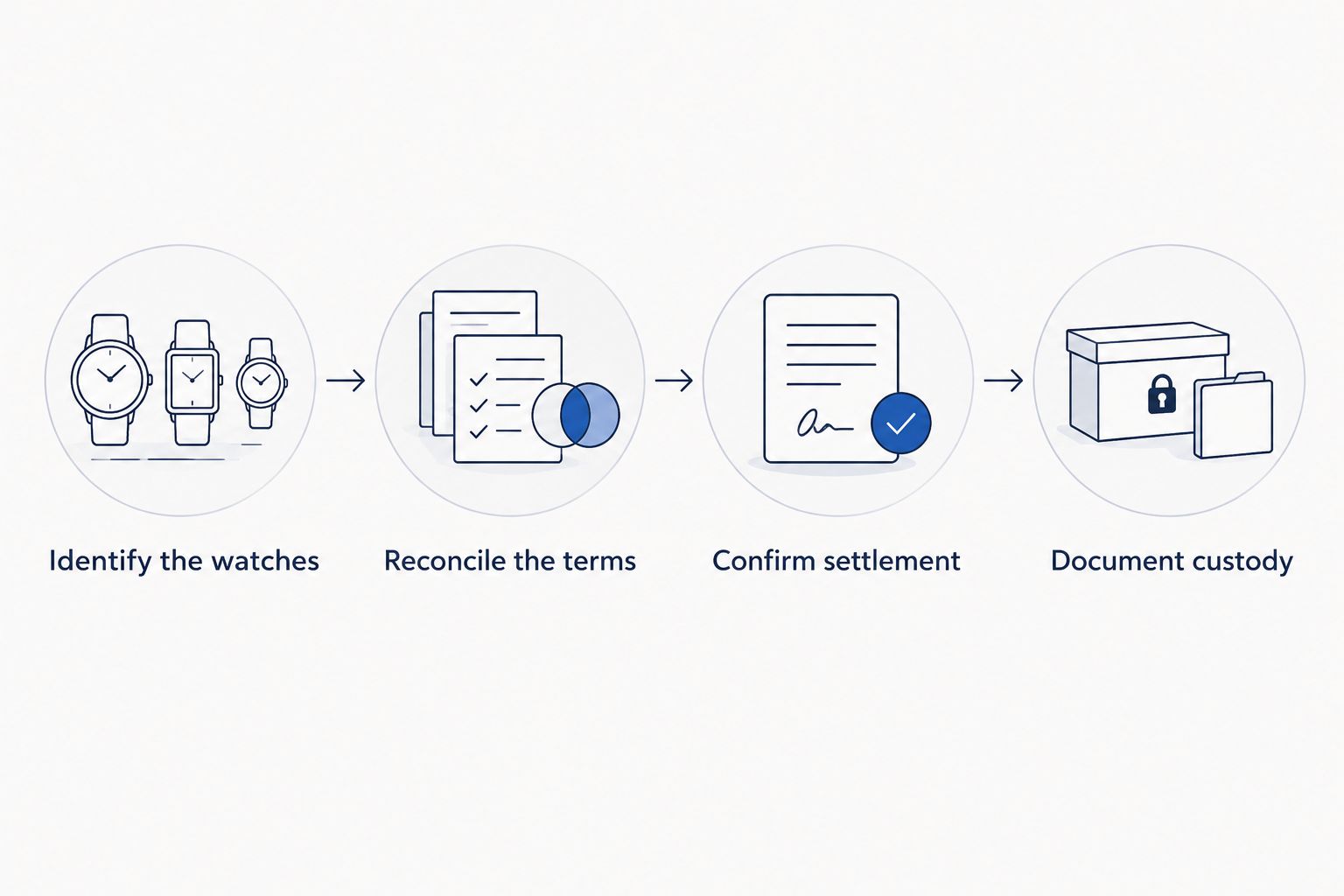
The handover sequence matters: identify the watches, reconcile the terms, confirm settlement, and document custody. Do not skip the custody record because the final purchase document is still being prepared.
Variant: Sell your watch before choosing its replacement
A separate sale is a valid alternative when you want to decide on the replacement independently. Complete the sale before treating its proceeds as part of your purchase plan. An assessment or acceptance message is not the same as a completed settlement.
- Prepare the same condition file and request written purchase terms without tying the enquiry to another watch.
- Confirm inspection, custody, acceptance, and settlement conditions for the sale.
- Retain the sale agreement and receipt after the transaction completes.
- Start the replacement purchase as a separate decision, with its own inspection and documentation checks.
The advantage is a clearer separation between the two decisions. The drawback is that you must organise each transaction independently; the replacement purchase is not automatically coordinated with disposal of the old watch.
If the sale terms change after inspection, reassess the sale on its own merits. Do not accept an unwanted replacement simply to avoid restarting your search.
Troubleshooting
The dealer changes the assessment after inspection
Request the specific findings behind the revision and compare them with your submission. Decide whether to accept the revised terms; if you decline, follow the return conditions agreed before inspection.
Your paperwork does not match the watch
Pause the transaction and establish which detail differs: reference, serial information, ownership record, or service description. Do not alter a document or dismiss the discrepancy as administrative without resolving it.
The watch was polished or has replacement components
Disclose the known work and ask the dealer to assess the watch on that basis. Keep cosmetic condition, component originality, and mechanical condition separate; one does not establish the others.
The replacement differs from the agreed example
Compare the watch and accompanying documents with the written agreement before accepting handover. Ask for the discrepancy to be resolved or the terms to be rewritten explicitly; a similar reference is not an automatic substitute.
Payment details change during the exchange
Stop and verify the new instructions through a contact channel you already trust. Do not rely solely on the message announcing the change, and retain the verified instructions with your transaction record.
Customize your workflow
Build a reusable collection record rather than starting from memory with every exchange. Keep reference details, service paperwork, accessory inventories, and dated condition photographs in separate folders for each watch.
For a 2026 review, update the condition file before each new enquiry. A photograph taken before later wear or servicing no longer describes the watch you are submitting.
Use Royal Watches for luxury watch research while keeping dealer acceptance and transaction terms as separate checks. Your shortlist should follow your wearing requirements, and your exchange should follow written evidence.
FAQ
How do I arrange a watch trade in Dubai?
Start by asking a dealer whether it accepts your exact watch reference for an exchange. Submit a condition file, agree on inspection and custody terms, and confirm the replacement and final transaction details in writing.
Can I trade in a watch without its box and papers?
Ask the receiving dealer whether it will consider your watch without those items. Describe precisely what is missing and provide the ownership and service records you have; do not present the set as complete.
Is a watch assessment from photographs final?
Treat a photograph-based assessment as preliminary unless the dealer explicitly confirms otherwise in writing. Ask what physical inspection remains and which findings would change the proposed terms.
Is trading in a watch better than selling it separately?
A trade-in suits buyers seeking a coordinated exchange, while a separate sale suits buyers who want independent decisions. Compare the acceptance, inspection, custody, and settlement conditions rather than assuming either route is better.
Should I service or polish my watch before a trade-in?
Ask the assessing dealer before commissioning work specifically for the exchange. Describe existing condition and known service history accurately, and do not authorise inspection-related work without agreed terms.
How do I confirm whether Royal Watches accepts trade-ins?
Ask Royal Watches directly about your specific reference and proposed exchange. Confirm acceptance, inspection arrangements, and written terms before handing over the watch.
What paperwork should I keep after exchanging my watch?
Keep the outgoing watch’s acceptance record, the replacement purchase document, the custody receipt, and settlement confirmation. Retain the replacement watch’s accompanying paperwork and any written condition disclosures as well.
One last thing
A receipt for inspection is not the same document as acceptance of an exchange. Make the purpose of custody explicit when you hand over your watch; that distinction remains useful even when the inspection and purchase happen during the same visit.
Related guides
- Paying for a luxury watch in Dubai by bank transfer
- Luxury watches for first-time collectors
- Shipping a luxury watch from Dubai abroad without customs issues
