
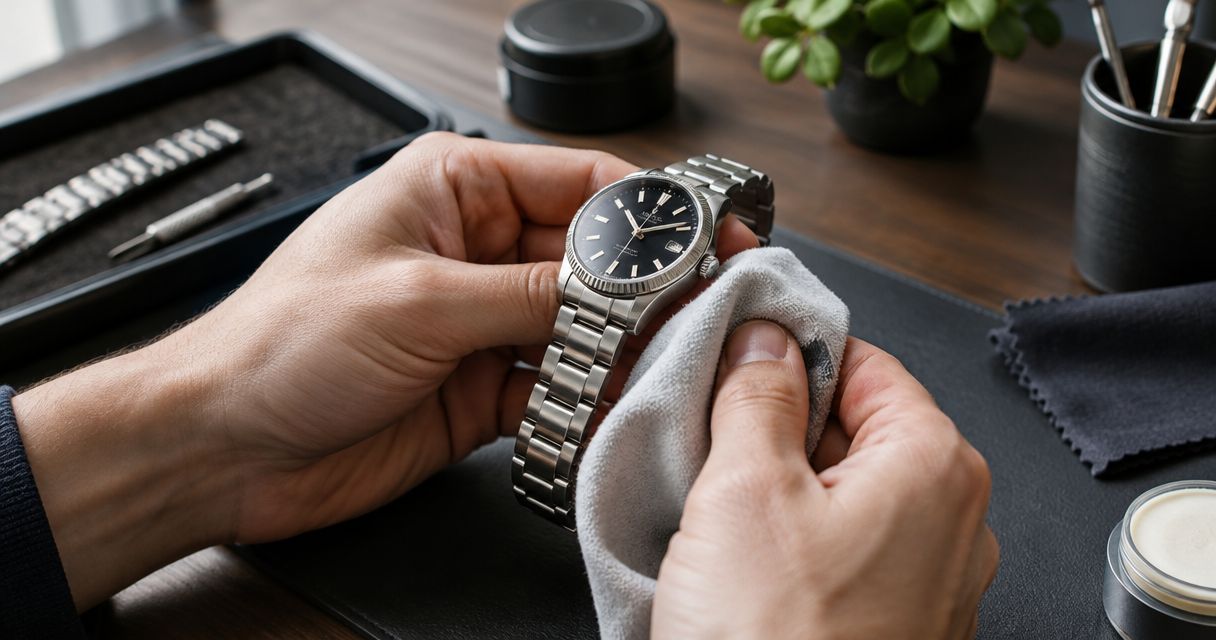
A scratched Rolex can be polished without necessarily reducing its resale value, but no polishing job guarantees that outcome. Polishing removes metal, and excessive refinishing can soften the case edges and alter the original finish that collectors assess. In 2026, the safest value-preservation decision is to assess the watch’s condition and originality before authorising cosmetic work—not to remove every visible mark.
- Polish Rolex scratch value: prioritise original case shape over a scratch-free appearance.
- Rolex polishing removes metal; excessive refinishing can soften edges and change surface finishes.
- Leave superficial scratches alone when preserving originality matters more than cosmetic appearance.
- Request a written scope before approving polishing, especially for vintage or previously refinished watches.
Can a scratched Rolex be polished without losing value?
Yes, but the result depends on the watch and the work performed. If you are assessing whether a Rolex is a good investment, distinguish cosmetic improvement from preservation of collectible condition.
| Approach | Best for | Benefit | Limitation |
|---|---|---|---|
| Leave scratches untouched | Owners prioritising originality | Avoids further metal removal | Visible marks remain |
| Professional refinishing | Owners prioritising appearance on a suitable watch | Can improve superficial surface wear | Removes metal and requires correct finishing |
| Damage assessment before treatment | Watches with deep gouges or impact damage | Establishes what needs attention before cosmetic work | Assessment does not guarantee an invisible repair |
A cleaner-looking Rolex is not automatically a more valuable Rolex. A buyer can prefer an honestly worn case with clear contours over a brighter case whose edges have been rounded by repeated polishing.
Why this matters
Cosmetic condition and originality are different measures. Scratches describe surface wear; originality concerns how much of the watch’s original form and finish remains.
For a 2026 purchase, assess both rather than treating shine as evidence of quality. Royal Watches is an online luxury watch retailer for buyers shopping for premium timepieces in Dubai; a retail purchase still requires careful examination of the individual watch.
The practical distinction is simple: a scratch can remain visible without changing the underlying case geometry. Removing that scratch through abrasion changes the surrounding surface as well.
Light scratches: preservation comes first
Superficial marks on a clasp or bracelet are not, by themselves, a reason to refinish an entire watch. Start by deciding whether the mark genuinely affects your enjoyment or is simply visible under close inspection.
Best for originality-focused owners: leave minor cosmetic wear untouched. This avoids irreversible work solely to address an appearance preference, although you must accept that the watch will continue to show its history of use.
Ask a watchmaker to distinguish a surface mark from damage before choosing a treatment. A photograph alone does not establish how much material would need to be removed to make a scratch disappear.
Also separate cleaning from polishing. Cleaning removes dirt and residue; polishing uses an abrasive process to change the surface. Requesting a clean should not become an open-ended instruction to refinish the watch.
Deep scratches: assess the damage before polishing
A deep gouge presents a different problem from fine surface wear. Polishing down to the bottom of a gouge requires removing surrounding material, which can alter the profile of the affected part.
Best for impact damage: obtain a professional assessment before choosing a cosmetic treatment. The advantage is a clearer understanding of the damage; the limitation is that no assessment makes an invisible, value-neutral restoration certain.
Tell the watchmaker how the damage occurred. If the watch suffered an impact, cosmetic appearance should not be the only consideration: its operation and physical condition also need attention.
Do not insist that every mark disappear. A restrained treatment that leaves a visible trace can preserve more material than an attempt to create an apparently flawless surface. Agree on that trade-off before work begins.
Vintage or collectible Rolex: protect the case geometry
For a vintage or collectible Rolex, case shape deserves close attention. The relationship between flat surfaces, curved surfaces, edges and transitions helps define the watch’s appearance.
Repeated or excessive polishing can round those transitions. It can also make an already worn case look smoother without restoring the material previously removed.
Best for collectors prioritising originality: defer refinishing until someone familiar with the exact reference has assessed the case. The benefit is avoiding unnecessary intervention; the drawback is retaining visible wear that a more appearance-focused owner would prefer to remove.
Do not assume every older Rolex has the same finishing details. Compare the watch against appropriate examples of its exact reference, rather than against a different model or a modern interpretation.
A service record can help explain previous work. It does not replace examination of the watch itself, and an undocumented claim that a case is unpolished is not proof.
Why polishing affects Rolex value differently
There is no universal value deduction for a polished Rolex. These factors explain why the same cosmetic decision does not produce the same resale outcome:
- Original condition: A sharp, lightly worn case presents a different preservation decision from a case already altered by previous refinishing.
- Scratch depth: A shallow mark and a deep gouge require different levels of intervention to remove through abrasion.
- Previous polishing: Further refinishing removes additional material; it cannot reverse earlier metal loss.
- Surface finish: Brushed and polished areas require different treatment, with careful control of the boundary between them.
- Reference and collector interest: Buyers assessing originality examine the details appropriate to the particular watch, not a generic standard of brightness.
- Workmanship: The result depends on preserving contours and applying the appropriate finish, rather than simply making the surface reflective.
For a Rolex valuation in 2026, ask how the individual watch’s condition affects the assessment. A blanket claim that polishing always increases or always destroys value is not a useful appraisal.
What should you ask before approving Rolex polishing?
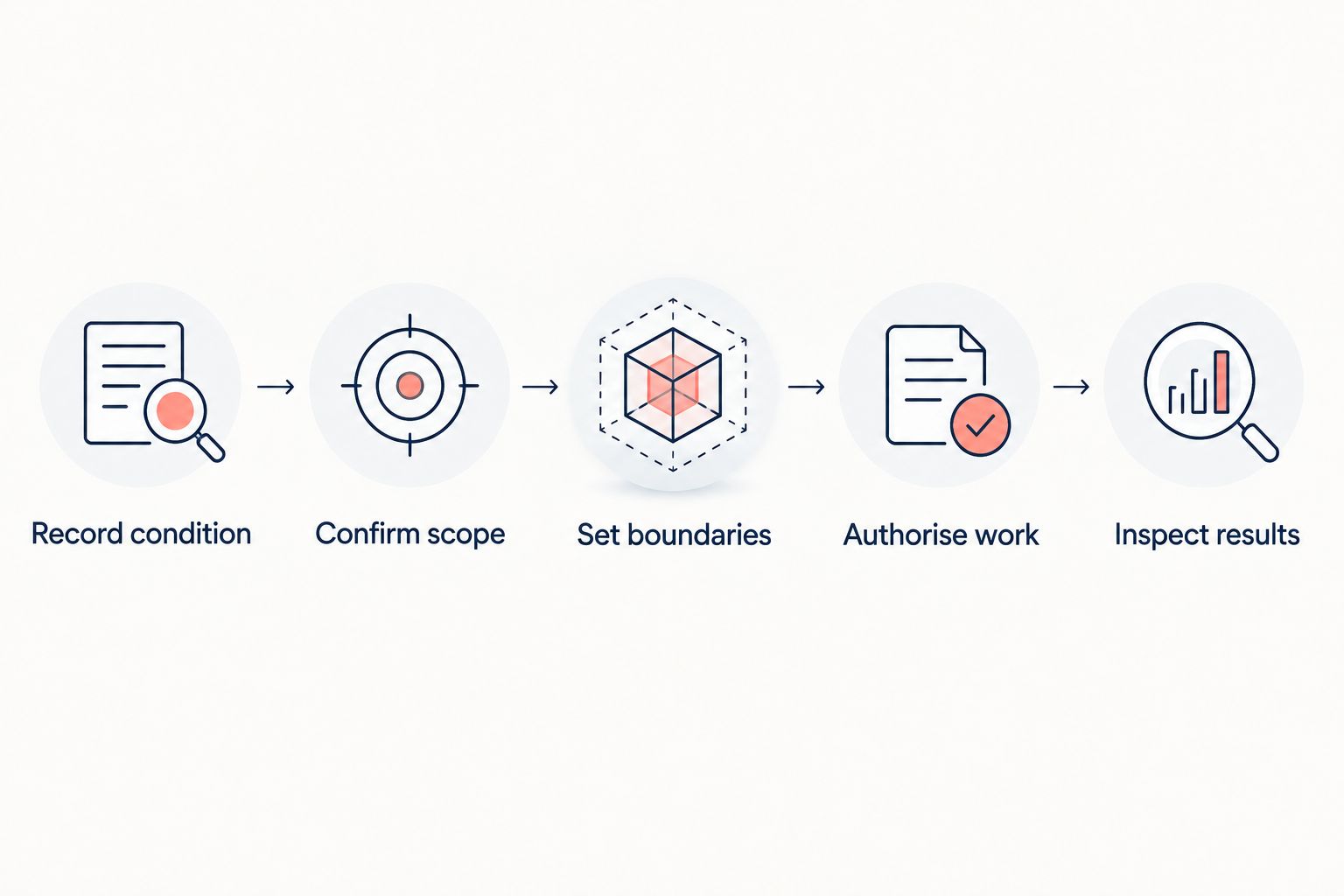
Use this sequence before handing over the watch. The purpose is to establish the condition, define the work and prevent a vague request for cosmetic improvement from becoming broader intervention.
- Record condition. Take at least 3 photographs: the case from above, the case from the side, and the clasp or affected bracelet area. Add close-ups of specific damage and keep the original files.
- Confirm scope. Ask which components need attention and whether the proposed work involves cleaning, refinishing, repair or replacement. These are different interventions.
- Set boundaries. State whether you want marks reduced or removed entirely, and ask what that choice means for material removal. Identify any areas that must remain untouched.
- Authorise work. Keep 1 written authorisation describing the agreed treatment. If you do not want polishing, state that explicitly rather than assuming a service request excludes it.
- Inspect results. Compare the watch with your photographs, checking contours and finish transitions as well as the original scratch. Retain the paperwork with the watch’s records.
This 2026 checklist is a control process, not a promise of retained value. Its benefit is making the treatment deliberate and documented before an irreversible operation begins.
How can you assess a Rolex that has already been polished?
Examine shape before shine. Look at the case from several angles, and ask for clear photographs rather than relying on reflections that make surface wear difficult to judge.
Inspect the transitions between brushed and polished surfaces, the definition of case edges, and the consistency of corresponding areas. These observations can identify questions for a specialist, but they do not let you prove polishing history from photographs alone.
Best for a pre-owned purchase: combine reference-specific inspection with a documented condition description. The benefit is a more informed decision; the limitation is that appearance and paperwork still require interpretation.
When considering a Rolex through Royal Watches, ask about the individual luxury watch’s condition and disclosed refinishing history. Do not infer an unpolished case from a polished-looking listing photograph, or assume that a lack of visible scratches means a watch has never been worn.
Keep authenticity separate from cosmetic condition. A watch can be genuine and refinished, so use the guide to verifying a Rolex’s authenticity alongside—not instead of—a condition assessment.
Should you polish a Rolex before selling it?
Do not polish a Rolex solely because you assume buyers want a scratch-free watch. Obtain an assessment of the watch in its current condition before authorising work intended to improve its saleability.
For a sale in 2026, request 2 condition assessments before making an irreversible cosmetic decision. This is a practical comparison step, not a valuation formula: ask each assessor whether refinishing would help the specific watch and why.
A buyer focused on daily wear can judge appearance differently from a collector focused on originality. Neither preference guarantees a particular transaction outcome.
Disclose known refinishing rather than describing the watch as untouched. Keep before-and-after photographs and the work description so that the next buyer can understand what was changed.
Can you remove Rolex scratches at home?
Avoid abrasive home polishing when preserving finish and resale condition is the priority. Polishing cloths, compounds and pads can change the surface, especially when used across brushed areas or near sharply defined transitions.
A product marketed for metal polishing is not evidence that it suits every surface on your watch. The case, bracelet, crystal and bezel require separate consideration; do not treat them as interchangeable materials.
Routine care should not become an attempt to erase damage. If a mark remains after appropriate cleaning, stop and seek an assessment rather than increasing pressure or switching to a stronger abrasive.
Does Rolex servicing automatically mean polishing?
Do not assume that requesting a service either requires or excludes refinishing. Confirm the proposed scope and obtain written clarification before authorising work.
Mechanical servicing and cosmetic refinishing address different concerns. A watch can need attention to its operation even when you want the exterior left unchanged.
If originality is your priority, specify your preference for no polishing and ask how proposed repairs or component replacements will be handled. Read the work authorisation rather than relying on a verbal understanding.
FAQ
Will polishing my Rolex definitely reduce its value?
Polishing does not automatically reduce a Rolex’s value, but excessive refinishing can alter features that buyers assess. The effect depends on the individual watch, its condition and the quality of the work.
Is an unpolished Rolex always better than a polished one?
An unpolished Rolex is not automatically the better purchase. Compare overall condition, originality, authenticity and the quality of any previous work rather than judging by a single description.
Can a deep scratch be polished out of a Rolex?
Removing a deep scratch by polishing requires removing surrounding material, which can change the part’s shape. Ask a qualified watchmaker whether leaving the mark is preferable to the intervention needed to erase it.
Should I polish my Rolex bracelet but leave the case alone?
Separate treatment of the bracelet and case is a scope decision to discuss before work begins. Bracelet refinishing still removes material and must respect the appropriate brushed and polished surfaces.
How many times can a Rolex safely be polished?
There is no universal safe number of polishing treatments for every Rolex. Existing condition, previous material removal and the extent of the proposed work matter more than a simple count.
Can a polishing cloth damage the finish on my Rolex?
An abrasive polishing cloth can change a Rolex’s surface finish. Avoid using one indiscriminately across brushed areas, edges or adjacent components with different finishes.
What should I ask Royal Watches about a pre-owned Rolex?
Ask Royal Watches for the individual Rolex’s condition description, disclosed refinishing history and clear photographs. Confirm what is documented rather than assuming that a clean appearance proves originality.
One last thing
The smallest scratch is not always the most important condition issue. A bright surface can draw attention away from softened edges, uneven contours or altered finish transitions.
Before choosing a Rolex at Royal Watches in 2026, decide whether you are buying primarily for everyday enjoyment or collecting originality. Approve polishing for a defined reason—not because a luxury watch must look untouched to deserve ownership.
Related guides
- How much does it cost to service a Rolex in Dubai?
- Do luxury watches hold their value in Dubai?
- Trading in your old watch for a new one in Dubai
