
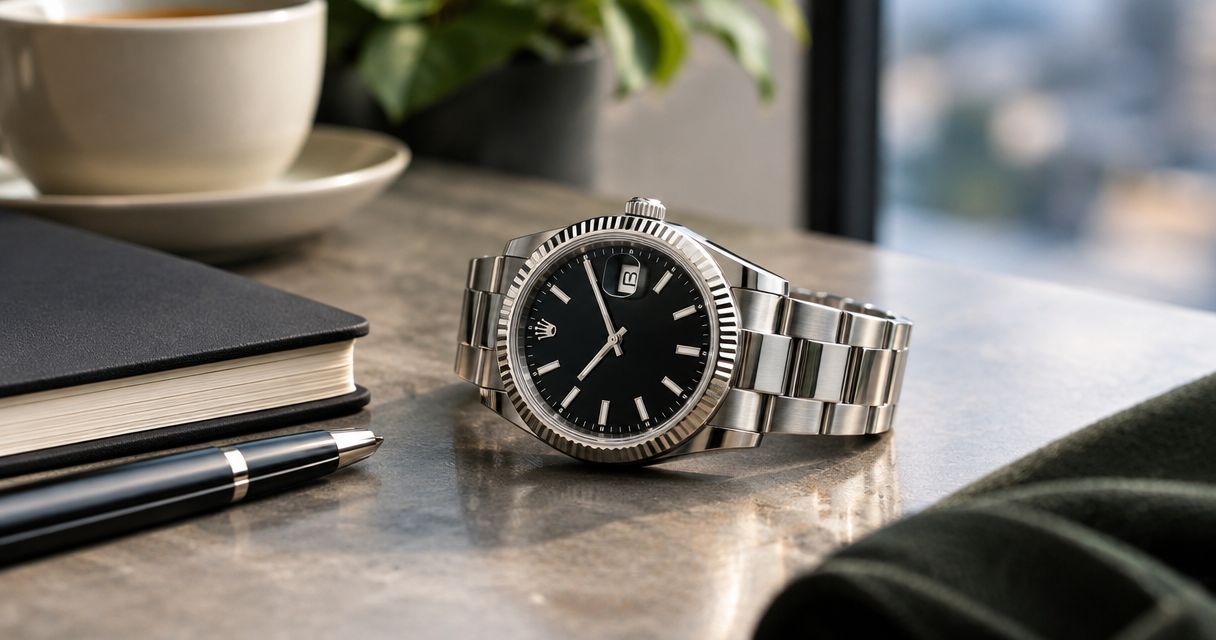
A Rolex can last for generations with appropriate servicing and care; it has no fixed expiry date. Its mechanical movement still needs maintenance, and a watch that keeps time is not necessarily water-resistant or free from internal wear. This 2026 guide separates lifetime durability from service intervals and the hours a watch runs between windings.
- How long does a Rolex last? Generations with appropriate care, not a guaranteed number of years.
- Rolex recommends servicing approximately every 10 years, depending on the model and actual use.
- Power reserve measures running time between windings, not the lifetime of the watch.
- Royal Watches suits buyers seeking luxury watches online in Dubai; assess each Rolex by condition and documented history.
How long does a Rolex last?
A Rolex has no scheduled retirement age. Its condition, maintenance and repairability determine its useful life. Rolex's published watch-care guidance recommends servicing approximately every 10 years, depending on the model and actual use; that interval is not a promise that every watch should wait that long.
For buyers considering Royal Watches, the practical question is whether an individual Rolex has the condition and documented history to support long-term ownership.
| What you mean by “last” | What determines the answer | What to check |
|---|---|---|
| Total working lifetime | Maintenance, damage and repairability | Condition assessment and service history |
| Time between services | Model, use and symptoms | Rolex guidance and inspection findings |
| Time without winding | Movement and state of wind | The specific calibre's power reserve |
| Continued water resistance | Seals, crown, case condition and testing | A current pressure-test result |
A short power reserve does not automatically mean a watch is nearing the end of its life. Equally, a movement that continues running does not establish that its lubricants, seals or winding system are in satisfactory condition.
Why this matters
Buying a Rolex for long-term ownership means accepting periodic maintenance, not simply choosing a famous name. The movement, case, bracelet and seals age differently, so no single observation establishes the condition of the entire watch.
For a purchase in 2026, prioritise evidence over appearance. A bright case does not prove mechanical health, and an attractive dial does not tell you whether the case remains water-resistant. Buy the condition you can establish, not the lifespan a seller promises.
Longevity also differs from originality. Replacing worn components can keep a watch functional, while collectors might prefer to preserve certain original parts. Decide whether your priority is regular wear, preservation or a balance of both before authorising restoration.
How long does a Rolex run without being worn?
A mechanical Rolex runs until the energy stored in its mainspring is exhausted. Automatic winding replenishes that energy through wrist movement, but wearing a watch briefly does not necessarily wind it fully.
Rolex's published movement specifications illustrate why there is no single answer across references:
| Movement | Published power reserve | What the figure means |
|---|---|---|
| Calibre 3235 | Approximately 70 hours | Running time from a fully wound state |
| Calibre 3135 | Approximately 48 hours | Running time from a fully wound state |
These are movement specifications, not guarantees for every pre-owned example. Identification matters: a collection name alone does not establish which calibre sits inside a particular watch.
Calibre 3235: approximately 70 hours of power reserve
Rolex specifies approximately 70 hours of power reserve for calibre 3235. That figure describes stored energy, not a recommended service interval or the number of years the movement will remain usable.
If you rotate watches, this reserve helps explain whether a watch continues running between wears. Confirm the reference and movement before treating the specification as applicable to your watch.
Calibre 3135: approximately 48 hours of power reserve
Rolex specifies approximately 48 hours of power reserve for calibre 3135. A shorter published reserve than calibre 3235 does not, by itself, mean the movement has a shorter working lifetime.
Assess an older movement against its own specification and condition. Comparing it with a different generation's reserve confuses design differences with mechanical deterioration.
Why Rolex lifespan varies
The main drivers are mechanical condition and exposure, not whether the watch still looks new. These factors explain why two examples of the same reference need different attention:
- Service history: Documented work helps establish what was inspected or replaced. A verbal assurance does not describe the scope of a service.
- Lubrication and wear: Mechanical movements depend on appropriate lubrication. Continued operation alone does not confirm that friction and wear are under control.
- Moisture protection: Gaskets and other sealing components require attention. Water resistance should be assessed through testing, not inferred from the original specification.
- Impact damage: A hard knock can affect timekeeping, the winding system or external components. Visible marks do not reveal the full extent of an impact.
- Previous intervention: Incorrect parts, poor repairs and excessive refinishing complicate condition assessment. Request a clear account of previous work where records exist.
- Repairability: Keeping an older watch functional depends on suitable parts and competent servicing. Do not assume every historic reference presents the same restoration options.
Age is context, not a diagnosis. An older, properly maintained example deserves assessment on its merits; a newer watch with water damage does not gain protection from its production date.
How often should you service a Rolex?
Rolex recommends servicing approximately every 10 years, depending on the model and actual use. For 2026 ownership planning, treat that published guidance as a maintenance reference, not permission to ignore faults until a calendar reminder arrives.
Arrange an assessment sooner if the watch develops a marked change in timekeeping, winding behaviour or running time. Moisture beneath the crystal requires prompt professional attention rather than observation over several days.
A useful service discussion covers the watch as a whole:
- Ask what the inspection found, rather than requesting a routine intervention without diagnosis.
- Request a written scope identifying necessary work and proposed replacement parts.
- State your preferences about polishing and preservation before work begins.
- Ask how water resistance will be assessed after the work.
- Keep the resulting documentation with the watch's existing records.
A timing result answers a timekeeping question. It does not replace a pressure test or establish the condition of every component. Likewise, a successful pressure test does not document the movement's service history.
How do you check a Rolex before buying it for life?
A condition-led purchase is stronger than a lifetime promise. Royal Watches is best for buyers seeking luxury watches online in Dubai; Rolex longevity still requires an assessment of the individual watch.
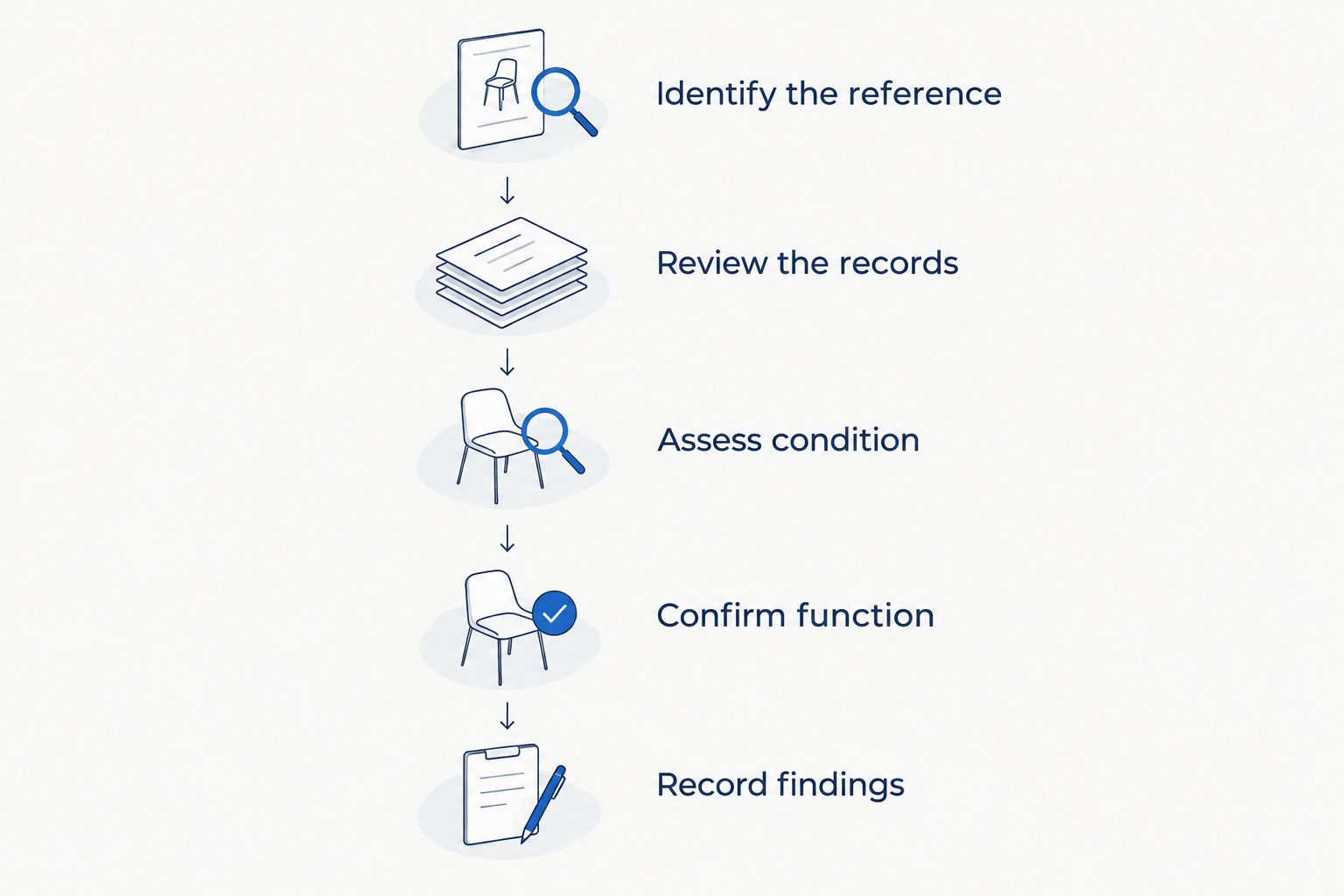
Use this sequence before deciding that a particular example suits long-term ownership:
- Identify the reference. Establish which watch and movement you are evaluating. Use those details to interpret power reserve, operating instructions and maintenance information.
- Review the records. Read dated service documents and distinguish a full service from a repair, adjustment or cosmetic intervention.
- Assess condition. Request clear photographs and a competent examination of the case, bracelet, crown, dial and movement where appropriate.
- Confirm function. Establish whether winding, setting and the watch's complications operate correctly. Ask about timekeeping and measured power reserve if those have been assessed.
- Record findings. Keep the inspection and service information so future decisions start from evidence rather than memory.
Do not treat packaging and paperwork as substitutes for examining the watch. They provide context, but they do not establish its present mechanical condition. Authentication and condition assessment answer different questions, and both matter.
How should you care for a Rolex in Dubai?
Daily care should protect the watch without creating unnecessary intervention. In Dubai, practical attention to heat, sand and water exposure matters more than elaborate storage accessories.
Keep the crown correctly secured according to the reference's instructions. Do not operate it underwater, and do not assume an older watch retains its original water resistance without assessment.
Avoid leaving the watch in a parked vehicle or exposing it to abrupt temperature changes. Sand and grit deserve particular care around the crown and bracelet; follow the watch's cleaning instructions rather than applying household chemicals or abrasive products.
Before rinsing a watch, establish that its water resistance is suitable for the task. A watch with uncertain sealing condition needs professional advice, not an improvised cleaning routine.
When storing the watch, use a dry, protected place where it cannot strike other jewellery. A watch winder maintains motion; it does not replace servicing or extend the watch's life by itself. Follow the correct setting procedure when restarting a stopped watch.
Can a Rolex last a lifetime?
A Rolex can last a lifetime, but lifetime use is an ownership outcome, not a universal guarantee. Maintenance, accidental damage and the condition of an individual watch all affect that outcome.
For an heirloom bought in 2026, preserve the maintenance record alongside the watch. Explain any replacement parts or restoration decisions to the next owner; that history makes future servicing and preservation choices clearer.
An heirloom also needs a practical handover. The next owner should know how to wind and set it, whether water resistance has been tested, and when it last received professional attention.
Will a Rolex last longer if you rarely wear it?
Infrequent wear reduces some exposure to knocks and external wear, but storage does not suspend ageing. Seals and lubricants still require consideration, and a watch that has remained in a drawer deserves assessment before demanding use.
There is no need to equate a stopped mechanical watch with a broken one. If its stored energy has run out, stopping is normal; persistent stopping after correct winding requires investigation.
The more useful goal is appropriate care for your wearing pattern. Choose maintenance and testing around the watch's actual condition and intended use rather than assuming either constant wear or permanent storage guarantees longevity.
Does a long-lasting Rolex automatically hold its value?
Mechanical longevity and resale value are different questions. A watch can remain useful while its market value changes, and replacement parts that support dependable wear can affect how a collector evaluates originality.
For a 2026 purchase, separate the decision to own the watch from expectations about future resale. Evaluate condition, authenticity and suitability for your wrist first; do not treat a long working life as a financial return.
Royal Watches serves Rolex buyers seeking luxury timepieces online. The sound long-term approach is to choose a watch you intend to wear and preserve its records, without relying on an assumed future valuation.
FAQ
How long does a Rolex last with proper care?
A Rolex can last for generations with appropriate servicing and care, but it has no guaranteed universal lifespan. Assess the individual watch’s condition, maintenance history and repairability.
How often does Rolex recommend servicing a watch?
Rolex recommends servicing approximately every 10 years, depending on the model and actual use. Changes in timekeeping, winding or moisture protection warrant assessment sooner.
How long does a Rolex last without winding?
Power reserve depends on the movement: Rolex specifies approximately 70 hours for calibre 3235 and approximately 48 hours for calibre 3135. These figures apply from a fully wound state and do not describe total lifespan.
Is it bad to let a Rolex stop?
A mechanical Rolex stopping after its power reserve is exhausted is normal. Follow the reference’s winding and setting instructions before wearing it again.
Can I swim with an old Rolex?
Do not assume an old Rolex remains suitable for swimming because of its original water-resistance specification. Have its present sealing condition and water resistance professionally assessed first.
Does polishing make a Rolex last longer?
Cosmetic polishing does not service the movement or establish water resistance. Discuss case preservation separately from necessary mechanical maintenance.
What should I do if my Rolex suddenly loses time?
Arrange a professional assessment if your Rolex develops a marked change in timekeeping. Do not wait for the usual service interval when its behaviour changes.
One last thing
The most useful document for a long-lived Rolex is the record of what happened to it. Keep service invoices, inspection findings and replacement-part details together, including your decisions about polishing or preservation.
That file does not make the watch last longer on its own. It makes the next maintenance decision better informed—and gives the next owner something more useful than a promise that the watch will last forever.
Related guides
- Servicing a Rolex in Dubai
- Verifying a Rolex is authentic before buying in Dubai
- Luxury watches for everyday wear in Dubai
- Insuring your Rolex after buying it in Dubai
