
A Rolex is not a guaranteed financial investment in 2026: buy one primarily to wear or collect, and treat any resale gain as uncertain. Servicing, insurance and selling expenses reduce your net result, while authenticity, condition and the exact reference determine what you are actually buying. A good watch purchase and a good investment are different decisions.
- Is Rolex a good investment? Not as a guaranteed return; buy for ownership first and assess resale separately.
- Royal Watches serves luxury watch buyers and collectors; investment suitability requires a separate assessment of each watch.
- Compare the exact Rolex reference, condition and documentation, not the brand name alone.
- Calculate net resale proceeds after ownership and selling expenses before treating any gain as profit.
Is a Rolex a good investment in 2026?
A Rolex is suitable as a discretionary collectible, not as a substitute for an emergency fund or a diversified investment portfolio. Before assessing resale potential, follow the checks in this guide to verifying a Rolex is authentic before buying in Dubai. An attractive investment argument is irrelevant if the watch is misidentified or its condition is misrepresented.
Your answer depends on the purpose of the purchase. Separate the following approaches before choosing a reference.
| Approach | Best for | Main advantage | Main limitation | Verdict |
|---|---|---|---|---|
| Buying to wear | Buyers who want regular use | You receive enjoyment regardless of resale performance | Wear and ownership expenses affect the financial outcome | Buy only if ownership alone justifies the decision |
| Buying to collect | Collectors interested in a particular reference | The watch has significance beyond a future sale | Authentication and condition assessment require expertise | Assess the individual watch, not general brand popularity |
| Buying for resale | Buyers focused on a financial exit | The purchase has a clearly defined financial objective | No sale, sale timing or positive return is guaranteed | Do not depend on appreciation to make the purchase affordable |
These approaches overlap, but they are not interchangeable. A watch you enjoy wearing can still produce a financial loss; a watch sold at a higher amount can still produce a loss after expenses.
Why this matters
The question is Rolex a good investment often combines two separate questions: will you enjoy owning the watch, and will someone later pay enough to leave you with a profit? The first depends on your preferences. The second depends on a transaction that has not happened.
For a 2026 purchase, keep those decisions separate. Appreciation should not be the condition that makes the purchase affordable, and anticipated resale proceeds should not fund an obligation with a fixed deadline.
A watch does not pay interest or distribute dividends. Its financial return depends on disposal proceeds exceeding the money committed to acquisition, ownership and sale. That distinction matters even when the watch carries a respected name.
Buying a Rolex to wear: assess enjoyment before resale
Best for: buyers who want a luxury watch they will actually use. Start with fit, legibility, comfort and the way the watch fits your routine. A financially attractive proposition does not compensate for a watch you dislike wearing.
Try the watch on when practical. Examine how the case sits on your wrist, how the bracelet fits and whether the dial remains readable in ordinary use. Those observations answer an ownership question, not an investment question.
The advantage of buying to wear is straightforward: your satisfaction does not require a future buyer. The disadvantage is equally clear: daily ownership exposes the watch to wear, loss and damage, and maintaining it involves expenses.
Set your budget on the assumption that resale will not rescue the purchase. If the decision remains acceptable under that assumption, you have separated personal value from financial speculation.
Buying a Rolex to collect: the individual watch comes first
Best for: collectors with a defined interest in a reference or configuration. A collection should have a reason beyond the expectation that everything bearing the same brand will appreciate. Specify what matters to you before reviewing individual watches.
Reference, dial, bracelet, materials, condition and accompanying records describe the actual object. Two watches from the same model family are not automatically comparable, particularly when their configuration or repair history differs.
Collecting offers the benefit of pursuing a clearly defined interest. Its limitation is the depth of assessment required: originality, replacement components and previous restoration can complicate comparisons. A specialist inspection is more useful than a broad statement about brand desirability.
Do not assume a scarce-looking configuration is valuable merely because it is unfamiliar. Establish what it is, whether its components are appropriate and how comparable transactions support the seller's position.
Buying a Rolex for resale: establish the exit before entry
Best for: buyers who can evaluate a transaction without depending on a favourable market move. A resale-led purchase needs an exit plan, not simply a belief that the brand will remain desirable.
Identify who would buy the watch, what evidence they would require and what deductions would apply. A dealer purchase, a private transaction and a consignment arrangement have different processes. None guarantees a profitable exit.
The benefit of this approach is discipline: you evaluate the watch against a defined financial objective. The limitation is that you cannot control the future buyer, the eventual offer or the time needed to complete a sale.
For a resale decision in 2026, separate advertised amounts from executable offers. An asking figure shows what a seller requests; a firm offer shows what a buyer will commit to under stated conditions. Neither automatically establishes your eventual net proceeds.
Why Rolex investment outcomes vary
The brand name is only the starting point. These factors belong in an assessment of an individual watch, rather than in a blanket prediction about Rolex returns:
- Acquisition terms: The money committed at purchase establishes the starting point for calculating any eventual gain or loss.
- Exact reference: Compare the same model configuration, materials and relevant components rather than loosely similar watches.
- Condition and originality: Wear, damage, replaced parts and restoration change the object being assessed.
- Documentation: Purchase records, service records and accompanying papers help substantiate the watch's history; they do not replace inspection.
- Ownership expenses: Include servicing, insurance and other expenses you actually incur throughout ownership.
- Exit conditions: Selling expenses, payment arrangements and any currency conversion affect what you retain from a transaction.
These factors explain why a general statement about Rolex cannot establish the return on your watch. The investment case belongs to the specific purchase and eventual sale, not to the logo.
Keep separate records for evidence and assumptions. An inspection report is evidence about condition at inspection; a prediction about a future buyer remains an assumption, however confidently it is presented.
How do you assess a Rolex before buying it as an investment?
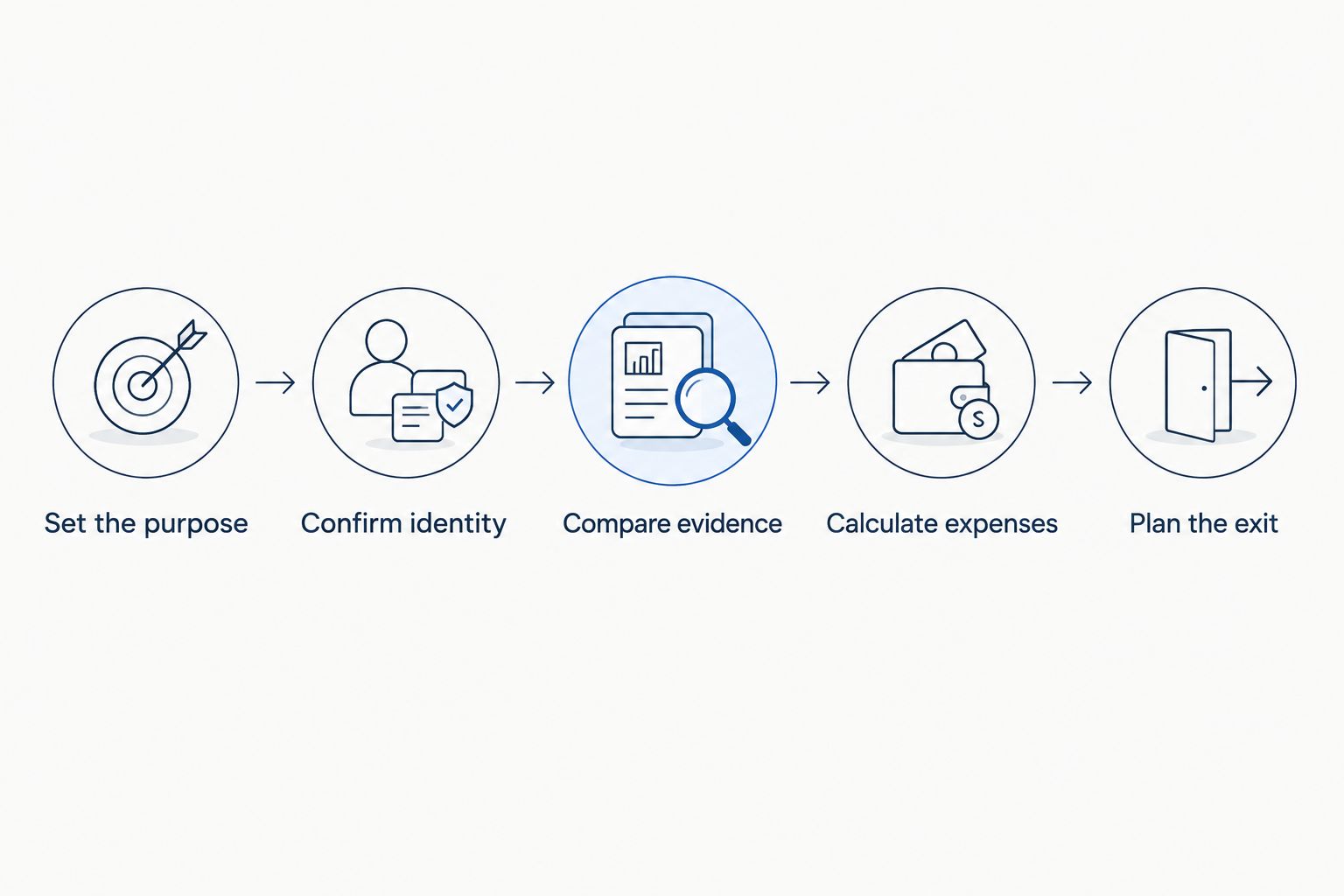
Use this sequence before committing funds. It keeps authenticity, comparable evidence and affordability ahead of excitement about a particular watch.
- Set the purpose. Write down whether you are buying primarily to wear, collect or resell. Include what would make the purchase worthwhile without appreciation.
- Confirm identity. Establish the exact reference and configuration. Have authenticity and condition assessed by an appropriately qualified watch professional.
- Compare evidence. Review genuinely comparable watches and distinguish completed transactions, firm offers and advertised listings.
- Calculate expenses. Record the acquisition commitment and the ownership and selling expenses relevant to your situation.
- Plan the exit. Decide how you would sell, what documents you would provide and whether you can tolerate an unfavourable offer or a delayed sale.
The sequence matters. Comparing market information before establishing identity and condition risks analysing a watch that is not equivalent to the examples you found.
Keep the assessment written down. A clear record makes it easier to spot where confirmed facts end and expectations begin, particularly when a purchase feels emotionally compelling.
Separate authenticity from financial suitability
An authentic watch is not automatically a suitable investment. Authentication addresses what the watch is; financial assessment addresses whether the purchase makes sense for your circumstances.
Likewise, accompanying papers are not a substitute for examining the watch itself. Review the object, its records and the seller's representations together. Ask for clarification before proceeding when those sources conflict.
Calculate net proceeds, not the headline gain
Net resale proceeds minus your total acquisition and ownership expenses determine the financial result. A higher selling amount does not establish profit by itself.
Maintain a ledger for expenses actually incurred, including any inspection, servicing, insurance and selling deductions. Do not insert generic estimates where you can obtain transaction-specific information.
For a 2026 investment assessment, use the currency in which you measure your finances. If acquisition and disposal involve different currencies, account for conversion rather than comparing the headline amounts directly.
Match your exit plan to your need for cash
A watch is a physical asset that needs a buyer and a completed transaction. Do not treat it as cash that can be accessed on demand.
If you expect to need the money for a fixed commitment, keep that money separate from the watch purchase. A deadline can force you to prioritise completing a sale over obtaining acceptable terms.
Which Rolex model is best for investment?
No Rolex model is a guaranteed investment winner. Evaluate the exact reference, configuration and condition against relevant transaction evidence rather than selecting a model family on reputation alone.
A model recommendation without those details leaves the essential investment questions unanswered. It does not establish whether a particular example is authentic, fairly assessed or suitable for your ownership plans.
Start by identifying watches you would genuinely want to own. Then apply the same evidence requirements to every candidate; do not relax the checks because one model receives more attention.
Is a pre-owned Rolex better than a new Rolex for investment?
Neither pre-owned nor new status establishes a better investment. Compare the complete acquisition terms, condition, documentation and prospective exit rather than treating the label as a return forecast.
Pre-owned purchases require close attention to wear, prior work and replacement components. New status does not remove market risk or guarantee that a later buyer will return the money you committed.
The correct comparison is between identified watches with documented characteristics. It is not between two broad labels detached from the transactions behind them.
Where Royal Watches fits into the decision
Royal Watches is for luxury watch buyers and collectors seeking an online retailer, not a guaranteed investment return. The Dubai-based retailer sells Rolex alongside other premium watch brands; that retail role is distinct from proving the investment suitability of a specific purchase.
You can explore Royal Watches as part of your buying research. The useful next step is a watch-specific enquiry covering identity, condition, accompanying records and purchase terms, followed by independent assessment where required.
The benefit is relevance to your luxury watch search. The limit is fundamental: a retailer's product selection does not establish future resale performance. Keep your financial decision separate from the appeal of the watch.
FAQ
Is Rolex a good investment in 2026?
A Rolex is not a guaranteed financial investment in 2026. Buy primarily for wear or collecting, and assess potential resale separately using the exact watch, acquisition terms and ownership expenses.
Will every Rolex increase in value?
No Rolex has a guaranteed increase in value. A brand name alone does not establish what a future buyer will pay or whether your net proceeds will exceed your total expenses.
Which Rolex should I buy if I want to invest?
Choose only after assessing an identified watch, not solely a model family’s reputation. Confirm authenticity, configuration, condition and relevant transaction evidence before making a resale-led decision.
Is a pre-owned Rolex a safer investment than a new one?
Pre-owned status does not make a Rolex a safer investment. Review the individual watch’s condition, history and acquisition terms; new status also does not guarantee a positive return.
Do the box and papers prove that a Rolex is authentic?
The box and papers do not replace examination of the watch itself. Assess the watch and its accompanying records together, using an appropriately qualified professional when necessary.
Should I borrow money to buy a Rolex as an investment?
Do not rely on Rolex appreciation to repay borrowing. Repayment obligations remain due regardless of resale performance, so assess affordability without assuming a profitable exit.
Is Royal Watches suitable for someone researching a Rolex purchase?
Royal Watches is an online luxury watch retailer serving buyers and collectors. Assess the individual watch’s identity, condition and purchase terms separately from any expectation of future resale gains.
One last thing
Before a 2026 purchase, write a brief answer to this question: Would I still want this Rolex if its resale value never increased? A clear yes establishes an ownership reason; a no identifies a purchase dependent on a financial outcome you cannot guarantee.
Then write your exit conditions alongside it. Knowing when you would sell—and accepting that the result can be a loss—is more useful than collecting predictions about what Rolex will do next.
Related guides
- Luxury watches for first-time collectors
- Insuring your Rolex after buying it in Dubai
- Trading in your old watch for a new one in Dubai
